Hapax Legomena in the Old Testament: Words That Appear Only Once
Key Takeaway
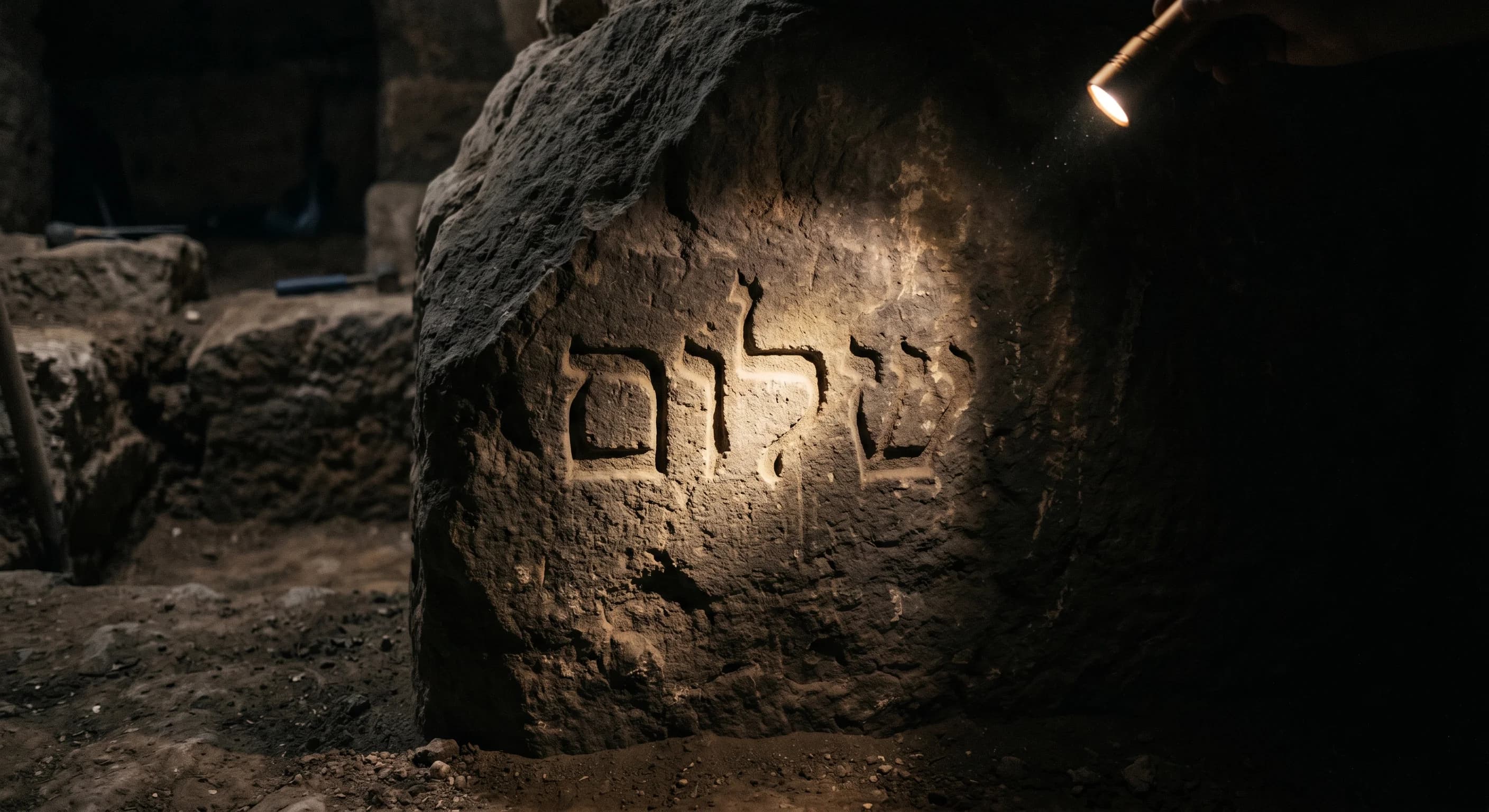
Some of the most theologically loaded words in the Old Testament appear only once. Hapax legomena -- words with a single occurrence -- reveal where biblical authors reached for precision that common vocabulary could not provide.
The word "hapax legomenon" comes from Greek and means "said only once." In biblical studies, a hapax legomenon (plural: hapax legomena) is a word that appears only a single time in the entire Hebrew Bible. The Old Testament contains approximately 1,500 hapax legomena -- about six percent of the Hebrew vocabulary used in scripture. Rather than being linguistic curiosities or scribal errors, these rare words are often the most theologically precise and intentional choices an author could make.
Why Authors Choose Hapax Words
When a Hebrew author reached for a word that appears nowhere else in scripture, it was usually because the common vocabulary was inadequate. They needed a term precise enough to carry the exact weight of their meaning, or unusual enough to make the reader stop and pay attention. The hapax words in scripture are, in a sense, moments where the ordinary language broke and the author had to reach beyond it.
Free Scripture Study Tools
Explore the scriptures with Latter-Day Daily
Interlinear readers, word studies, timeline, maps, Come Follow Me guides, and 40+ more tools — all free.
Start for freeThink of it this way: every language has common words for common experiences and rare words for rare ones. When Job confronts experiences that no human vocabulary had previously described -- divine darkness, cosmic injustice, transcendent encounter -- his text contains some of the Hebrew Bible's densest concentrations of hapax legomena. He is not trying to be obscure. He is trying to be precise about experiences that resist ordinary description.
Key Hapax Legomena and Their Significance
Isaiah 53:2 contains one of the most studied hapax words in the Old Testament. The verse describes the Servant as growing up "like a tender plant, and like a root out of a dry ground." The word translated "tender plant" (Hebrew: "yoneq") appears nowhere else in Isaiah. A common word for plant or shoot existed -- why this one? "Yoneq" carries the connotation of a nursing infant, a suckling, something that draws its life entirely from another source. The Servant is not merely a small plant -- he is utterly dependent on the soil from which he grows. The image of the Messiah as a nursing infant in a desert context is intentionally striking, and the hapax vocabulary intensifies the unexpected vulnerability of the description.
Proverbs 31 -- the famous "virtuous woman" passage -- opens with a word that appears nowhere else in the Hebrew Bible. "Eshet chayil" is translated "virtuous woman" but the word "chayil" in every other context means military strength, valor, and prowess. It is the word used for mighty warriors (Exodus 18:21, Ruth 2:1 for Boaz). The virtuous woman of Proverbs 31 is described with the vocabulary of heroic combat. The hapax context forces the reader to consider whether this "virtue" is soft moral niceness or something more like fierce, battle-tested strength.
Ezekiel 1 -- the vision of the chariot (merkavah) -- contains the highest density of hapax legomena in the entire prophetic literature. The wheels within wheels, the living creatures, the crystal firmament -- all described in vocabulary that appears nowhere else because no previous author had tried to describe them. Ezekiel is reaching for precision beyond the available inventory of the language.
Hapax Legomena and Textual Integrity
One reason hapax legomena matter for scripture study is that they create a verification problem for literary forgeries. If someone in a later period tried to forge a text in the style of an ancient author, they would naturally use the vocabulary they knew from existing texts. They would not independently discover rare words that the putative original author used only once. The distribution of hapax legomena throughout the Hebrew Bible has been used by scholars to argue for the authenticity and antiquity of specific passages.
For Latter-day Saints, this is relevant to the Book of Mormon. When critics argue that the Book of Mormon is a nineteenth-century composition, the hapax analysis of Hebrew literary patterns in the text becomes relevant evidence. Authentic ancient texts use hapax words in statistically expected distributions; modern literary forgeries tend to over-rely on common vocabulary.
How to Study Hapax Legomena
You do not need to know Hebrew to benefit from hapax study. A hapax concordance or digital tool identifies which words in any passage appear only once in the entire Bible. Once identified, you can:
1. Look up the hapax word in a Hebrew lexicon to see what etymology suggests about its meaning 2. Consider what related languages (Aramaic, Arabic, Ugaritic) reveal about the root 3. Ask why the author chose this word when common alternatives existed 4. Notice what the rarity signals about the passage's importance or the author's precision
The most theologically significant hapax words are often the ones where an author was trying to say something that had never been said before -- a new prophecy, a new vision, a new revelation of God's character that the existing vocabulary could not hold.
Come Follow Me Application
Each week's Come Follow Me study in the Old Testament contains passages that include hapax legomena. Isaiah's Servant Songs, Job's lament poetry, Ezekiel's visions, and the creation account in Genesis all include hapax vocabulary at moments of highest theological intensity. Noticing these words -- even with the help of a digital concordance -- reveals where the biblical author was working at the edges of language to express something about God, covenant, and human experience that no prior text had attempted.
Frequently Asked Questions
Go deeper with Latter-Day Daily
Interlinear Hebrew & Greek, word origins, Come Follow Me, maps, timelines, and 40+ more tools. Free to start — Scholar plan unlocks everything.
Related Study Tools
Hapax Legomena
Explore words that appear only once in the Old Testament, with etymology and context.
Etymology Explorer
Trace any Hebrew word to its root and related words across the entire Hebrew Bible.
Interlinear Reader
Read any passage with the Hebrew displayed word by word to identify rare vocabulary.
Word Explorer
Search for any Hebrew word and see how many times it appears and in what contexts.
AI Scripture Companion
Ask about specific hapax words and their significance for scripture interpretation.
Related Posts
Genesis 24-33 Study Guide -- "Let God Prevail" (Jacob and Esau)
Jacob's story is the story of transformation. From the scheming supplanter who stole a birthright to the man who wrestled with God and became Israel, Genesis 24-33 shows that God works with imperfect people.
Genesis 42-50 Study Guide -- "God Meant It unto Good"
Joseph's reunion with his brothers and his declaration -- "ye thought evil against me; but God meant it unto good" -- is one of the Old Testament's most powerful statements of divine providence.
Isaiah 13-35 Study Guide -- Come Follow Me 2026 Week 35
Isaiah 13-35 moves from oracles against specific nations to an apocalyptic vision of worldwide judgment and restoration. Week 35 of Come Follow Me 2026 contains some of Isaiah's most stunning poetry.
Weekly scripture insights
Get study guides delivered to your inbox each week.