The Twelve Tribes of Israel: Hebrew Name Meanings and Latter-day Significance
Key Takeaway
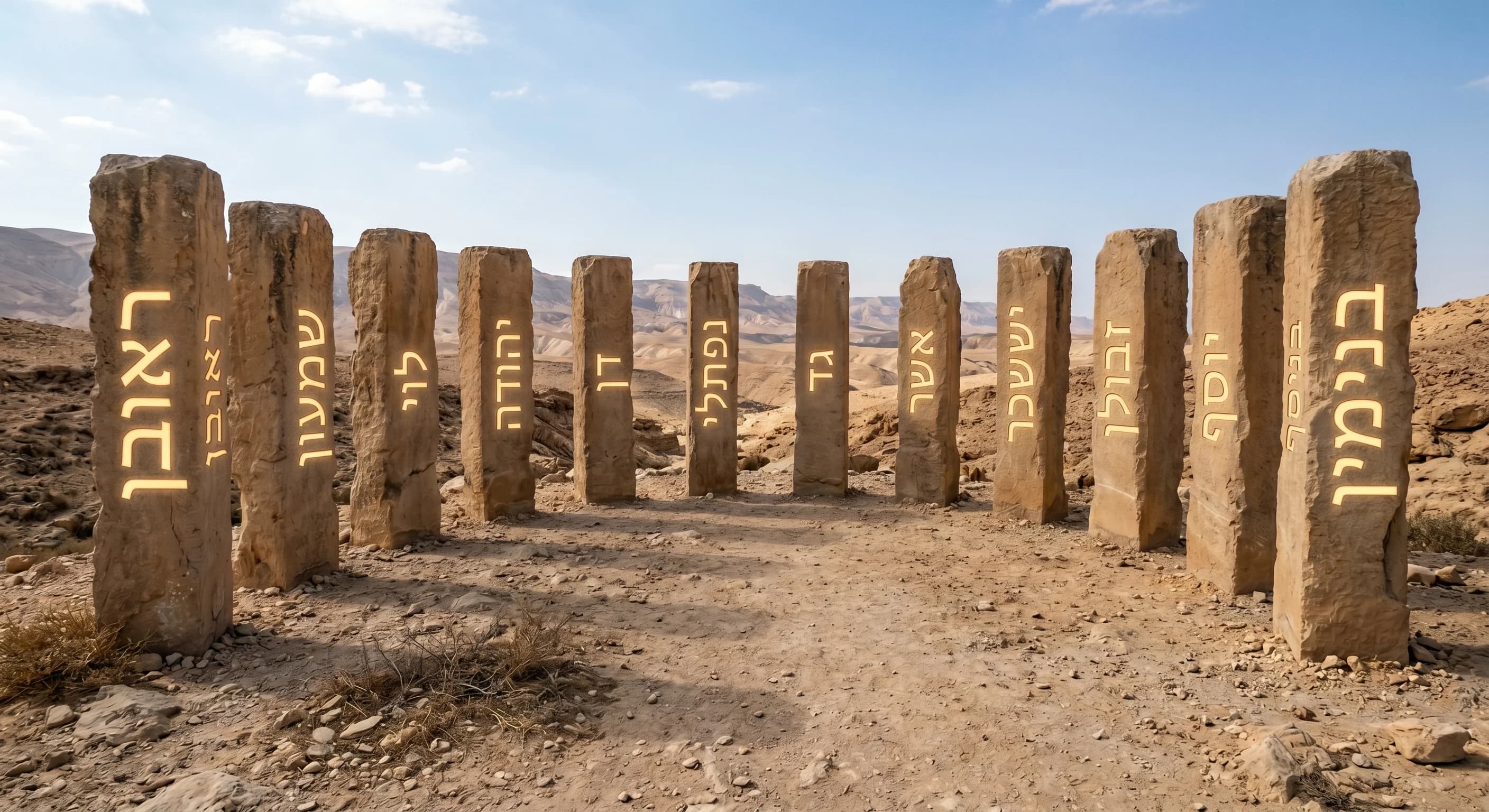
Each of the twelve tribes of Israel has a name that is a Hebrew word with specific meaning tied to the circumstances of that son's birth. Understanding these names reveals an entire layer of Old Testament narrative and Latter-day Saint tribal identity.
The twelve sons of Jacob -- renamed Israel after wrestling with God at Peniel -- became the twelve tribes that shaped Israel's entire national identity. Each son's birth is narrated in Genesis 29-30 and 35, and in each case, the mother gives the child a name that is a Hebrew word reflecting the circumstances of the birth, a prayer, or a declaration of faith. These are not arbitrary names. They are theological statements embedded in the genealogy.
For Latter-day Saints, tribal identity matters practically: patriarchal blessings declare which tribe each member belongs to, and the gathering of Israel in the last days involves the literal re-gathering of all twelve tribes. Understanding what these tribal names mean gives depth to a declaration that might otherwise feel abstract.
The Sons of Leah (Jacob's First Wife)
Free Scripture Study Tools
Explore the scriptures with Latter-Day Daily
Interlinear readers, word studies, timeline, maps, Come Follow Me guides, and 40+ more tools — all free.
Start for freeReuben (Re'uven): "See, a son!" Leah names him from "ra'ah" (to see) and "ben" (son). "For the Lord hath looked upon my affliction; now therefore my husband will love me" (Genesis 29:32). Reuben is the firstborn but loses his birthright (Genesis 49:4) because of his sin with Bilhah. The tribe of Reuben settled east of the Jordan, outside the main land of inheritance -- a geographic reflection of the forfeited primacy.
Simeon (Shim'on): "Hearing/heard." From "shama" (to hear). "Because the Lord hath heard that I was hated, he hath therefore given me this son also" (Genesis 29:33). The tribe of Simeon eventually lost its independent territorial inheritance and was absorbed into Judah (Joshua 19:1-9) -- another echo of the blessing's diminishment (Genesis 49:5-7).
Levi (Levi): "Attached/joined." From a root meaning to join or be joined. "Now this time will my husband be joined unto me" (Genesis 29:34). The tribe of Levi received no territorial inheritance -- instead, they were set apart as the priestly tribe, distributed among all the other tribes to serve at the altars and teach the law. Their inheritance was God himself (Numbers 18:20).
Judah (Yehudah): "Praise/thanksgiving." From "yadah" (to praise, to give thanks). "Now will I praise the Lord: therefore she called his name Judah" (Genesis 29:35). Judah receives the royal blessing: "The sceptre shall not depart from Judah, nor a lawgiver from between his feet, until Shiloh come" (Genesis 49:10). Christ descended from Judah -- the Lion of the tribe of Judah (Revelation 5:5). Judaism itself takes its name from this tribe.
The Sons of Bilhah (Rachel's Maidservant)
Dan: "Judge/judged." From "din" (to judge). "God hath judged me, and hath also heard my voice, and hath given me a son" (Genesis 30:6). The tribe of Dan was prominent in the period of the judges (Samson was a Danite) but is notably absent from the list of sealed tribes in Revelation 7 -- a subject of extensive theological discussion.
Naphtali (Naftali): "My wrestling/struggles." From "pathal" (to twist, wrestle). "With great wrestlings have I wrestled with my sister, and I have prevailed" (Genesis 30:8). Isaiah 9:1-2 singles out the land of Naphtali as the region that would first see the great light -- the area of Galilee where Jesus began his ministry.
The Sons of Zilpah (Leah's Maidservant)
Gad: "Good fortune/a troop." Ambiguous -- could be "fortune" or "a troop coming." "A troop cometh" (Genesis 30:11). The tribe of Gad settled east of the Jordan and was celebrated as warriors.
Asher (Asher): "Happy/blessed." From "esher" (happiness, blessing). "Happy am I, for the daughters will call me blessed" (Genesis 30:13). Moses blesses Asher: "Let Asher be blessed with children; let him be acceptable to his brethren, and let him dip his foot in oil" (Deuteronomy 33:24) -- the olive oil of Galilee, the richest agricultural blessing of the promised land.
The Remaining Sons of Leah
Issachar (Yissakhar): "He brings reward/wages." From "sakar" (wages, reward). "God hath given me my hire" (Genesis 30:18). The tribe of Issachar was described in 1 Chronicles 12:32 as men "that had understanding of the times, to know what Israel ought to do" -- a reputation for wisdom and discernment.
Zebulun (Zevulun): "Honor/dwelling." From "zaval" (to honor, to dwell with). "Now will my husband dwell with me" (Genesis 30:20). Zebulun settled on the borders of the sea and was a trading tribe. Moses's blessing calls Zebulun to "rejoice in thy going out" (Deuteronomy 33:18) -- commercial and maritime activity.
The Sons of Rachel (Jacob's Beloved Wife)
Joseph (Yosef): "He adds/may He add." From "yasaf" (to add, to increase). "The Lord shall add to me another son" (Genesis 30:24). Joseph receives the double portion of the birthright -- his two sons, Ephraim and Manasseh, each receive a full tribal inheritance. Latter-day Saints who receive a declaration of Ephraim in their patriarchal blessing are spiritual heirs of Joseph's double portion.
Ephraim: "Doubly fruitful." From "para" (to be fruitful) with the dual marker. Jacob crosses his hands to give Ephraim the greater blessing (Genesis 48:14), making the younger greater than the older -- the recurring pattern in Genesis. Ephraim is the gathering tribe in the last days (Jeremiah 31:9); many Latter-day Saint patriarchal blessings declare lineage through Ephraim.
Manasseh: "Forgetting/causing to forget." From "nasah" (to forget). Joseph named him "For God... hath made me forget all my toil, and all my father's house" (Genesis 41:51). Manasseh is regularly declared in patriarchal blessings alongside Ephraim.
Benjamin (Binyamin): "Son of the right hand" (from "ben" son + "yamin" right hand). His mother Rachel died in childbirth and called him Ben-Oni (son of my sorrow); Jacob renamed him Benjamin. Saul and the apostle Paul were Benjaminites. In Jacob's blessing, Benjamin is compared to a ravenous wolf (Genesis 49:27) -- a warrior tribe.
The Significance of Tribal Names for Latter-day Saints
The patriarchal blessing tradition declares each member's tribal affiliation -- whether literal blood descent or adoption into the covenant family. Knowing what each tribal name means gives the declaration personal resonance. To be declared of Ephraim is to be declared of Joseph's double portion, the gathering tribe. To be declared of Judah is to be declared of the royal line. To be declared of Levi is to be declared of the priestly tribe.
The family tree of Jacob is not ancient history locked in the book of Genesis. It is the framework for understanding how covenant Israel has gathered and will gather in the last days -- and how your own family is woven into that ancient promise.
Frequently Asked Questions
Go deeper with Latter-Day Daily
Interlinear Hebrew & Greek, word origins, Come Follow Me, maps, timelines, and 40+ more tools. Free to start — Scholar plan unlocks everything.
Related Study Tools
Twelve Tribes
Explore the geography, history, and blessings of each of Israel's twelve tribes.
Family Trees
Visualize the genealogy from Jacob through his twelve sons and their descendants.
Etymology Explorer
Trace the Hebrew meaning of each tribal name and the root words behind them.
Scripture Map
See the geographic territory assigned to each tribe in the promised land.
Covenant Tracker
Trace how Jacob's tribal blessings (Genesis 49) connect to the Abrahamic covenant's fulfillment.
Related Posts
Genesis 24-33 Study Guide -- "Let God Prevail" (Jacob and Esau)
Jacob's story is the story of transformation. From the scheming supplanter who stole a birthright to the man who wrestled with God and became Israel, Genesis 24-33 shows that God works with imperfect people.
Genesis 42-50 Study Guide -- "God Meant It unto Good"
Joseph's reunion with his brothers and his declaration -- "ye thought evil against me; but God meant it unto good" -- is one of the Old Testament's most powerful statements of divine providence.
Genesis 12-17, Abraham 1-2 Study Guide -- "The Abrahamic Covenant"
The Abrahamic covenant -- land, posterity, and priesthood blessing -- is the backbone of the entire Old Testament. Abraham 1-2 restores the personal story behind the covenant's most important recipient.
Weekly scripture insights
Get study guides delivered to your inbox each week.