Loading...
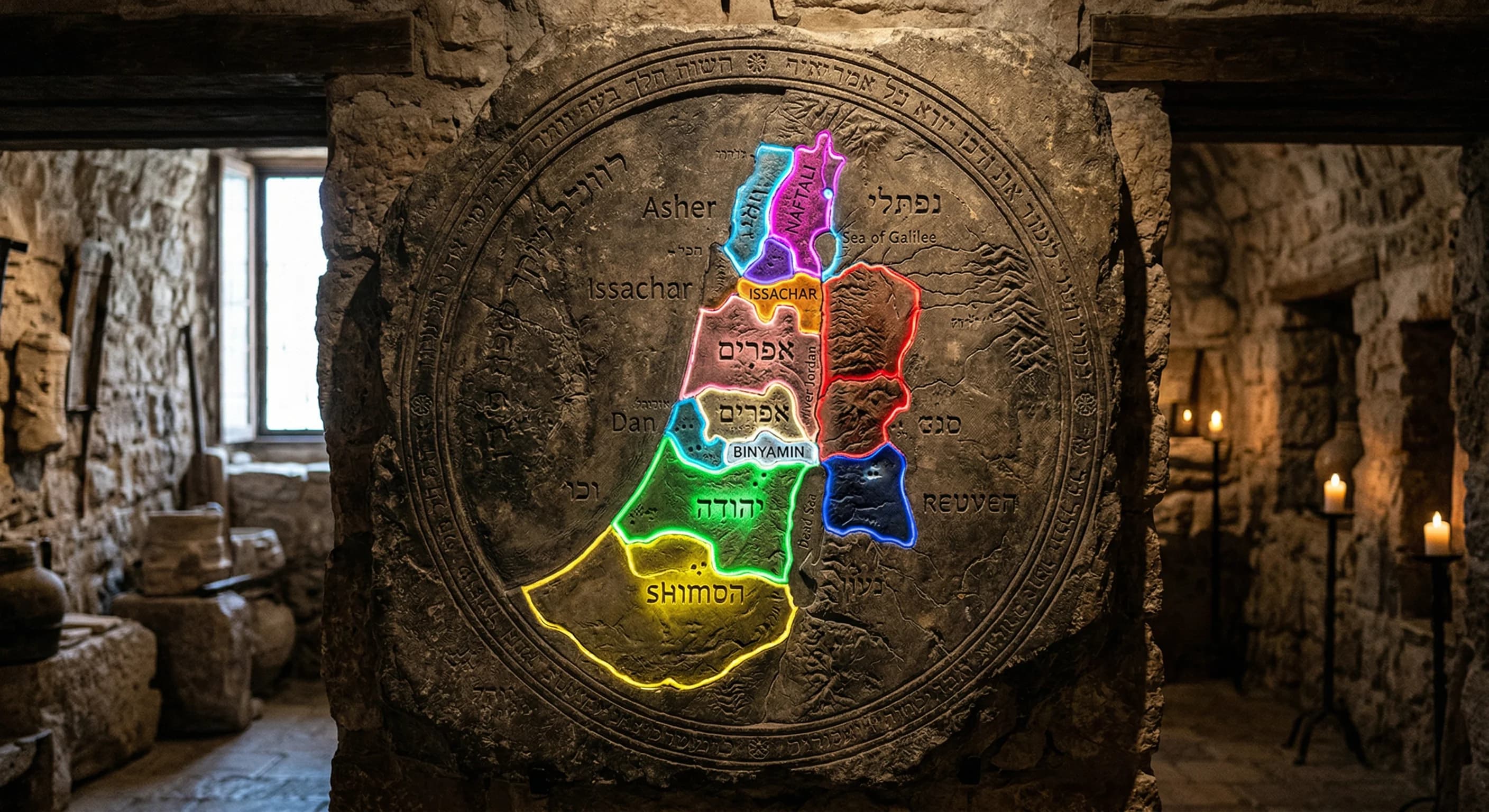
Twelve Tribes of Israel
Discover Jacob's sons, their blessings, territories, and place in Latter-day Saint doctrine
What are the Twelve Tribes of Israel?
The twelve tribes of Israel are the descendants of Jacob (Israel) and his four wives: Leah, Rachel, Bilhah, and Zilpah. Each tribe received unique blessings from Jacob in Genesis 49 and from Moses in Deuteronomy 33, establishing their roles, characteristics, and destinies.
In the Old Testament narrative, Judah became the prominent southern kingdom after Israel's division, giving its name to the Jewish people. The other tribes were scattered throughout history, with Ephraim and Manasseh (Joseph's sons) holding particular significance as the house of Israel in latter-day doctrine.
In Latter-day Saint theology, the gathering of Israel refers to the literal gathering of the descendants of the twelve tribes in the last days. Patriarchal blessings connect modern Church members to specific tribes through their lineage. Ephraim holds a special role as the leading tribe responsible for gathering the rest of Israel.
Each tribe had a specific territory in Canaan (except Levi, whose tribe was scattered among the others for priestly service), received distinctive blessings from both Jacob and Moses, and produced notable spiritual leaders and descendants including kings, prophets, and eventually the Savior Himself.
How It Works
1
Choose Your View
Toggle between the 12 Sons of Jacob (all except Levi) or the 12 Tribes of Israel (Levi included, Joseph split into Ephraim and Manasseh)
2
Filter and Search
Filter by mother (Leah, Rachel, Bilhah, or Zilpah) or search for specific tribes by name, meaning, territory, or notable descendants
3
Explore Details
Click any tribe card to expand and read their Genesis blessing, Deuteronomy blessing, territory description, notable descendants, and LDS significance
Key Features
Dual Viewing Modes
Toggle between 12 Sons of Jacob and 12 Tribes of Israel perspectives to understand both genealogical and territorial organizations
Patriarchal Blessings
Read both Jacob's blessings (Genesis 49) and Moses' blessings (Deuteronomy 33) for each tribe in their entirety
Territorial Maps
Explore detailed descriptions of each tribe's territory in Canaan, from Mediterranean coasts to Transjordanian pasturelands
Notable Descendants
Discover which biblical figures, kings, prophets, and even the Savior came from each tribe
LDS Connections
Learn the spiritual significance of each tribe in Latter-day Saint doctrine, patriarchal lineages, and the gathering of Israel
Smart Filtering
Filter by mother or search across names, meanings, and territories to quickly find the tribes you're studying
Frequently Asked Questions
What's the difference between the 12 Sons of Jacob and the 12 Tribes of Israel?
The 12 Sons of Jacob refers to all of Jacob's sons born to his four wives. The 12 Tribes of Israel represents how these descendants organized into tribal territories in Canaan. Since Joseph had two sons (Ephraim and Manasseh) who each became tribes, and Levi had no territory (serving as priests), the tribal arrangement differs from birth order. In the Sons view, Levi is a son; in the Tribes view, Levi is separate as the priestly tribe.
Why did Levi not receive a territory?
Levi was set apart for the priesthood and temple service. Instead of a territory, the Levites received cities distributed throughout all the other tribes. This allowed them to serve as priests and teachers throughout Israel. The Levites maintained the tabernacle and later the temple, performing sacred ordinances and administering the law.
What is Ephraim's role in Latter-day Saint doctrine?
In LDS doctrine, Ephraim is the chief tribe of the house of Israel and holds keys over the gathering of Israel in the last days. Joseph Smith was of Ephraim, and the restoration of the gospel came through Joseph, son of Joseph. Most members who receive patriarchal blessings are designated as Ephraim or related to Ephraim's house.
How are patriarchal blessings connected to the tribes?
In LDS practice, each person may receive a patriarchal blessing that declares their lineage through one of the tribes of Israel. These blessings are spiritual confirmations of one's connection to the house of Israel and may contain specific promises and guidance. Patriarchal blessings are a modern expression of the ancient pattern of tribal blessings seen in Genesis 49 and Deuteronomy 33.
Are the 12 tribes still distinct today?
After the Babylonian exile in 586 BCE, most of the northern tribes were dispersed and lost their distinct identities. Most Jewish people today are from Judah (giving Judaism its name). The other tribes are considered 'lost' in historical terms, though Latter-day revelation teaches that all tribes will be gathered in the last days through missionary work and the gospel.
Why did Jacob give different blessings than Moses?
Jacob's blessings in Genesis 49 focus on personal characteristics and individual destinies. Moses' blessings in Deuteronomy 33 were given 40 years later as the tribes prepared to enter Canaan and emphasize their roles in occupying and defending the land. Both sets of blessings complement each other in revealing divine purposes for each tribe.
Start Using Twelve Tribes of Israel
Full access to Twelve Tribes of Israel and 40+ other study tools.
Starting at $7/mo or $69.99/yr
Already have an account? Sign in