Old Testament Prophecies of Jesus Christ: A Latter-day Saint Guide
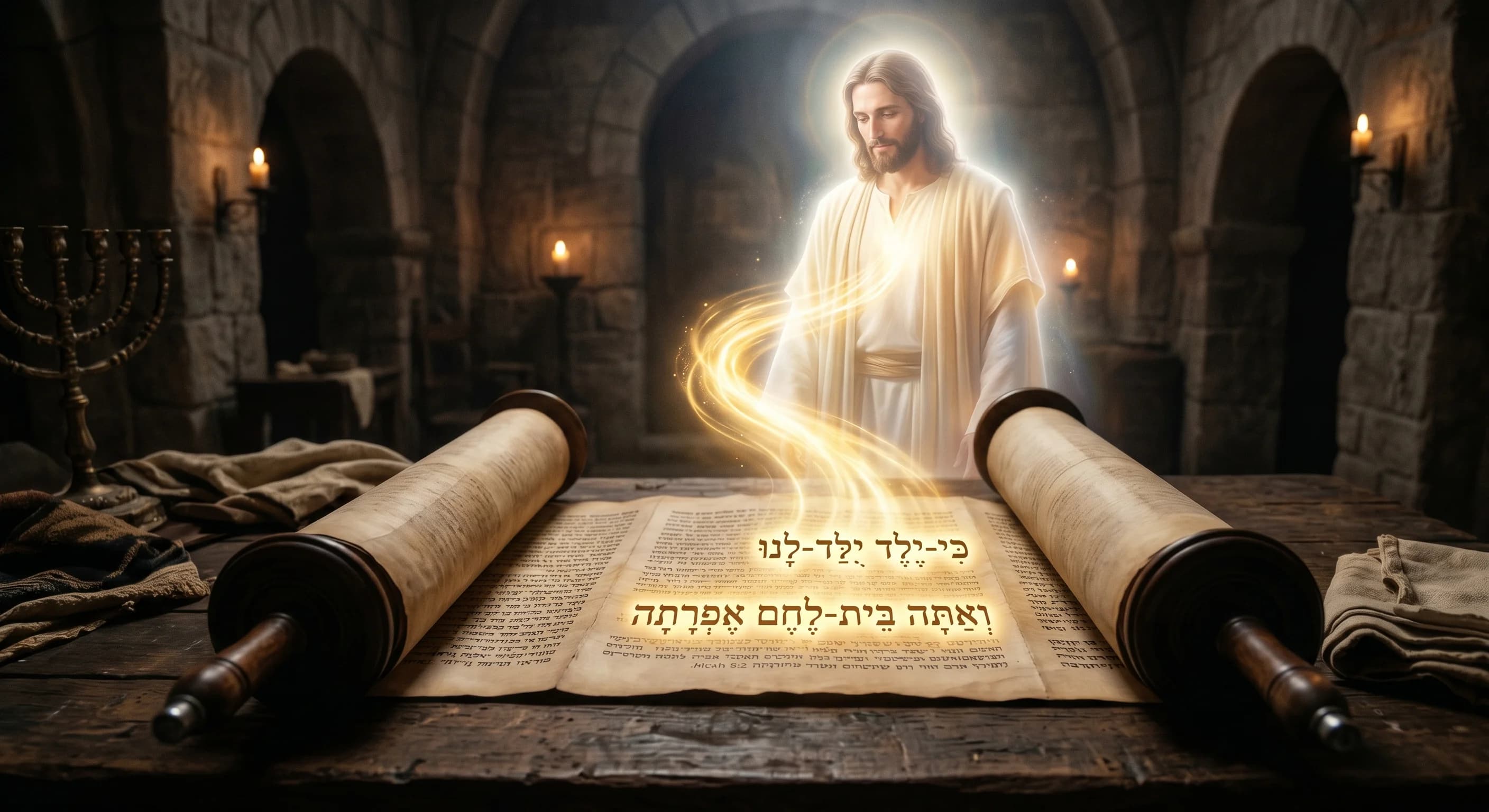
Key Takeaway
From the seed of Eve to the suffering Servant of Isaiah 53, the Old Testament is saturated with prophecies of Jesus Christ. This guide traces the most significant Messianic prophecies for Latter-day Saint scripture study.
The Old Testament is not merely the preface to the New Testament -- it is a sustained, detailed, and remarkably precise prophecy of Jesus Christ. Jesus himself declared, "Search the scriptures; for in them ye think ye have eternal life: and they are they which testify of me" (John 5:39). After his resurrection, "beginning at Moses and all the prophets, he expounded unto them in all the scriptures the things concerning himself" (Luke 24:27). For Latter-day Saints, this testimony of Christ extends beyond proof-texting a few famous passages -- the entire Old Testament is structured as a witness of the Messiah.
The Proto-Evangelium: Genesis 3:15
The first Messianic prophecy appears in the third chapter of the Bible, immediately after the Fall. God tells the serpent: "And I will put enmity between thee and the woman, and between thy seed and her seed; it shall bruise thy head, and thou shalt bruise his heel" (Genesis 3:15). This verse, called the "proto-evangelium" (first gospel), contains the essential pattern of the Atonement: the heel of the Messiah would be bruised (temporarily wounded -- crucifixion) while his seed would bruise the serpent's head (permanently destroy the power of death and Satan). The Hebrew word "shuph" means to strike, wound, or crush -- and it appears twice, once for what the serpent does to the heel and once for what the woman's seed does to the head. The asymmetry is the prophecy: the serpent wounds; the Messiah destroys.
Free Scripture Study Tools
Explore the scriptures with Latter-Day Daily
Interlinear readers, word studies, timeline, maps, Come Follow Me guides, and 40+ more tools — all free.
Start for freeThe Ram on Moriah: Genesis 22:13-14
The binding of Isaac (the Akedah) is one of the Old Testament's most transparent typological prophecies. Abraham is commanded to offer his son of promise on Mount Moriah. As he lifts the knife, an angel stops him and a ram caught in a thicket is offered in Isaac's place. Abraham names the place "YHWH Yireh" -- "The Lord will provide" or "The Lord will be seen." Genesis 22:14 adds: "as it is said to this day, In the mount of the Lord it shall be seen." Moriah is traditionally identified with the Temple Mount in Jerusalem -- the place where, millennia later, the true sacrificial Lamb was offered. The ram in the thicket was always a temporary substitute, pointing forward to the permanent Provision.
The Suffering Servant: Isaiah 53
Isaiah 53 is the most detailed and explicit Messianic prophecy in the Old Testament. Written approximately 700 years before Christ, it describes: - A man "despised and rejected of men; a man of sorrows, and acquainted with grief" (v. 3) - Who "hath borne our griefs, and carried our sorrows" (v. 4) - "Wounded for our transgressions... bruised for our iniquities" (v. 5) - "With his stripes we are healed" (v. 5) - "He was oppressed, and he was afflicted, yet he opened not his mouth: he is brought as a lamb to the slaughter" (v. 7) - "He was cut off out of the land of the living: for the transgression of my people was he stricken" (v. 8) - "He shall see of the travail of his soul, and shall be satisfied" (v. 11) -- the resurrection
Abinadi quotes this entire chapter in Mosiah 14, applying it directly to Christ centuries before his birth. Philip uses it to convert the Ethiopian eunuch (Acts 8:32-35). Christ himself quotes from it at the Last Supper (Luke 22:37).
The Virgin Birth: Isaiah 7:14
"Therefore the Lord himself shall give you a sign; Behold, a virgin shall conceive, and bear a son, and shall call his name Immanuel" (Isaiah 7:14). Matthew 1:23 explicitly applies this to the birth of Jesus. The Hebrew word "almah" means a young woman of marriageable age -- in its historical context, a young woman of honor who would be expected to be a virgin. The Septuagint (the Greek Old Testament) translates it "parthenos" (virgin), the word Matthew quotes. The sign's miraculous character -- a virgin conceiving -- was already present in the original Hebrew context.
The Ruler from Bethlehem: Micah 5:2
"But thou, Bethlehem Ephratah, though thou be little among the thousands of Judah, yet out of thee shall he come forth unto me that is to be ruler in Israel; whose goings forth have been from of old, from everlasting." When the Magi arrived asking where the Messiah was to be born, Herod's scribes quoted this verse without hesitation (Matthew 2:4-6). "Whose goings forth have been from of old, from everlasting" is a declaration of the Messiah's premortal, eternal existence -- identical to Restoration theology's understanding of Christ as the premortal Jehovah.
The Entry on a Donkey: Zechariah 9:9
"Rejoice greatly, O daughter of Zion; shout, O daughter of Jerusalem: behold, thy King cometh unto thee: he is just, and having salvation; lowly, and riding upon an ass, and upon a colt the foal of an ass." Matthew 21:5 and John 12:15 cite this prophecy explicitly at the triumphal entry. The prophet's image -- a king who comes not on a war horse but on a donkey -- is an image of the peaceable kingdom, the ruler who conquers not by force but by covenant faithfulness.
The Thirty Pieces of Silver: Zechariah 11:12-13
"And I said unto them, If ye think good, give me my price; and if not, forbear. So they weighed for my price thirty pieces of silver. And the Lord said unto me, Cast it unto the potter: a goodly price that I was prised at of them. And I took the thirty pieces of silver, and cast them to the potter in the house of the Lord." Matthew 27:9-10 quotes this prophecy at Judas's betrayal. The precision is remarkable -- not just a betrayal, but a specific sum (thirty silver pieces), a specific location (the temple), and a specific use (a potter's field). Zechariah wrote this approximately 520 years before it happened.
The Piercing: Zechariah 12:10
"And they shall look upon me whom they have pierced, and they shall mourn for him, as one mourneth for his only son." John 19:37 quotes this at the crucifixion. Revelation 1:7 quotes it again at the Second Coming: "Behold, he cometh with clouds; and every eye shall see him, and they also which pierced him." The prophecy is fulfilled twice -- first at the cross, finally at the return.
The Pattern of Prophetic Precision
These prophecies were not vague or generic. They specified the location (Bethlehem), the method of entry (donkey), the price of betrayal (thirty silver pieces), the use of that money (potter's field), the manner of death (piercing), and the outcome (resurrection after death). The statistical probability of one person accidentally fulfilling even a handful of these prophecies is negligible. For Latter-day Saints, this prophetic precision is evidence of the divine foreknowledge and the unified authorship of scripture -- the same God who spoke to Isaiah and Zechariah was preparing the world for the coming of His Son.
Frequently Asked Questions
Go deeper with Latter-Day Daily
Interlinear Hebrew & Greek, word origins, Come Follow Me, maps, timelines, and 40+ more tools. Free to start — Scholar plan unlocks everything.
Related Study Tools
Names of Christ
See every Old Testament name and title of Christ, from Immanuel to the Suffering Servant.
Parallel Passages
Compare Old Testament Messianic prophecies with their New Testament and Book of Mormon fulfillments.
Scripture Chains
Build scripture chains tracing Messianic prophecies from Genesis to Revelation.
Interlinear Reader
Read Isaiah 53 and Zechariah 12 in the original Hebrew to see the precision of Messianic language.
Etymology Explorer
Study 'Immanuel' (God with us), 'almah' (young woman/virgin), and other Messianic Hebrew terms.
Related Posts
Genesis 24-33 Study Guide -- "Let God Prevail" (Jacob and Esau)
Jacob's story is the story of transformation. From the scheming supplanter who stole a birthright to the man who wrestled with God and became Israel, Genesis 24-33 shows that God works with imperfect people.
Isaiah 13-35 Study Guide -- Come Follow Me 2026 Week 35
Isaiah 13-35 moves from oracles against specific nations to an apocalyptic vision of worldwide judgment and restoration. Week 35 of Come Follow Me 2026 contains some of Isaiah's most stunning poetry.
Genesis 42-50 Study Guide -- "God Meant It unto Good"
Joseph's reunion with his brothers and his declaration -- "ye thought evil against me; but God meant it unto good" -- is one of the Old Testament's most powerful statements of divine providence.
Weekly scripture insights
Get study guides delivered to your inbox each week.