Isaiah 56-66 Study Guide -- Come Follow Me 2026 Week 37
Key Takeaway
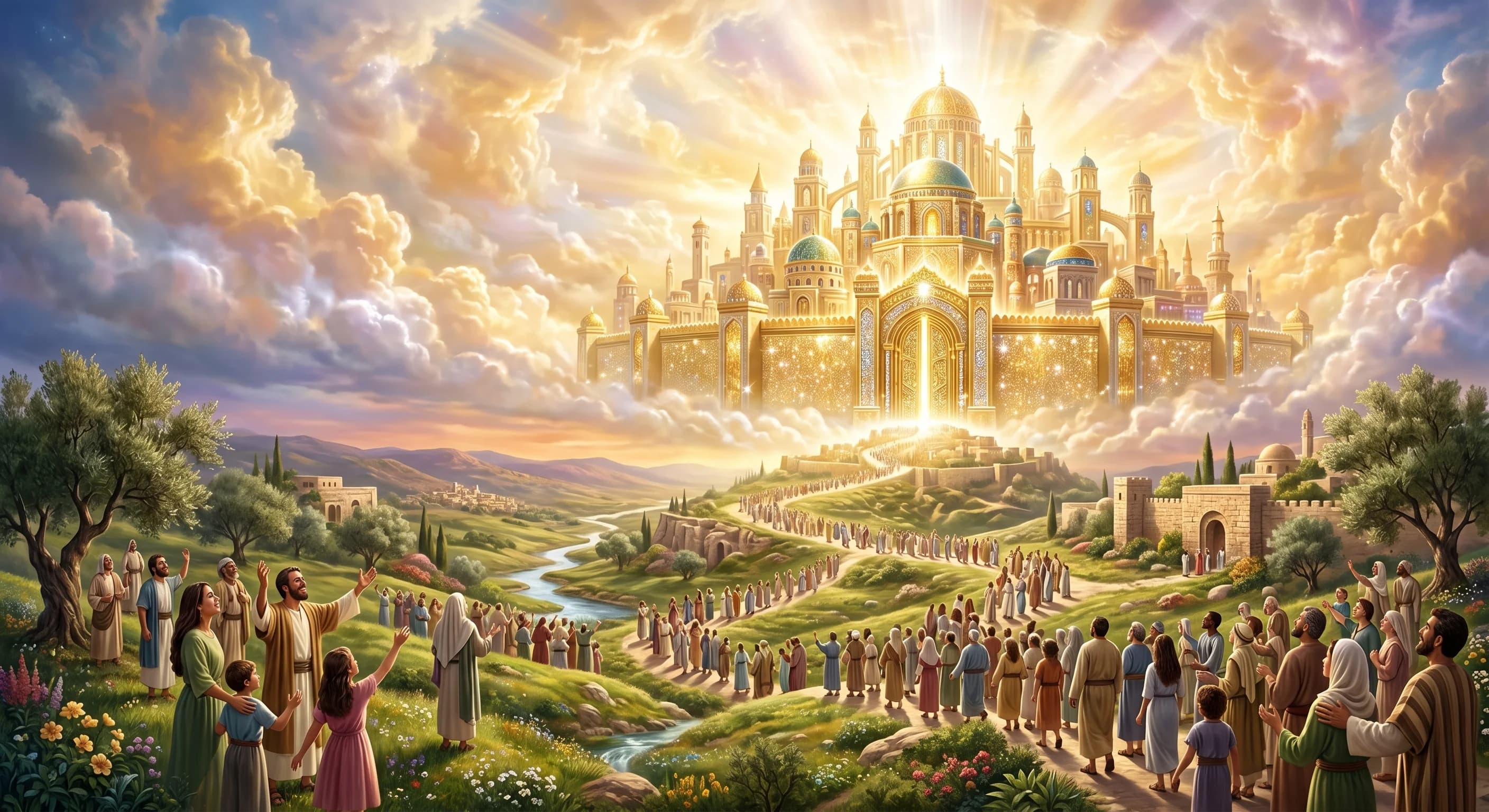
Isaiah 56-66 closes the book with a vision of gathered Israel, the true fast of Isaiah 58, the glory of Zion in Isaiah 60, and the new heaven and new earth. Week 37 of Come Follow Me 2026 culminates Isaiah's prophetic vision.
Isaiah 56-66 is the prophet's closing vision -- a panorama of the restored covenant community that gathers Israel and Gentiles together, demands genuine rather than performative religion, and ends with the most sustained description of millennial glory in the Old Testament. These chapters are densely quoted in Restoration scripture and in General Conference because they speak directly to our dispensation.
Isaiah 56-57: The Gathering Broadened
The opening of chapter 56 immediately challenges narrow definitions of Israel: "Also the sons of the stranger, that join themselves to the Lord, to serve him... Even them will I bring to my holy mountain, and make them joyful in my house of prayer: for mine house shall be called an house of prayer for all people" (Isaiah 56:6-7). Jesus quotes this verse when cleansing the temple (Matthew 21:13; Mark 11:17), making clear that the exclusion of Gentiles from the temple courts violated Isaiah's explicit prophecy.
Free Scripture Study Tools
Explore the scriptures with Latter-Day Daily
Interlinear readers, word studies, timeline, maps, Come Follow Me guides, and 40+ more tools — all free.
Start for freeThe broadening extends to those the law of Moses excluded: "Neither let the eunuch say, Behold, I am a dry tree. For thus saith the Lord unto the eunuchs that keep my sabbaths... Even unto them will I give in mine house and within my walls a place and a name" (Isaiah 56:3-5). The Hebrew word "yad vashem" (a place and a name) gave its name to Israel's Holocaust memorial -- the conviction that every excluded person deserves to be remembered and included.
Isaiah 58: The True Fast
Chapter 58 is one of the most pastorally applicable passages in the entire Old Testament. The people complain that they fast but God does not notice. Isaiah's response is surgical: "Is not this the fast that I have chosen? to loose the bands of wickedness, to undo the heavy burdens, and to let the oppressed go free, and that ye break every yoke?" (Isaiah 58:6).
The true fast is not hunger -- it is justice. It is not ritual performance -- it is breaking oppressive structures and sharing bread with the hungry. The Hebrew word "paras" (to break, to share) in verse 7 carries the weight of an active, distributive act. Fasting that does not issue in concrete action on behalf of the poor is, in God's eyes, no fast at all.
The promises attached to this true fast are among Isaiah's most breathtaking: "Then shall thy light break forth as the morning... and the Lord shall guide thee continually, and satisfy thy soul in drought, and make fat thy bones: and thou shalt be like a watered garden" (Isaiah 58:8, 11). The metaphor of a "watered garden" contrasts directly with the desolate wilderness that disobedience produces. The obedient faster becomes an oasis in the desert.
Isaiah 60-62: The Glory of Zion
Chapter 60 is the most frequently quoted Isaiah chapter in General Conference talks. "Arise, shine; for thy light is come, and the glory of the Lord is risen upon thee" (Isaiah 60:1). The command is addressed to Zion -- the covenant community -- whose light does not originate in itself but reflects the divine glory that has settled upon it. "Arise" (Hebrew: "qumi") is a word of resurrection and activation. "Shine" (Hebrew: "uri") uses the same root as "Or" (light), the first creative word of Genesis 1:3. The people of Zion bring creation's first light into the darkened world.
Isaiah 61:1-2 -- "The Spirit of the Lord God is upon me; because the Lord hath anointed me to preach good tidings unto the meek" -- is the passage Jesus reads in the Nazareth synagogue at the beginning of his public ministry (Luke 4:18-19). He sits down and says, "This day is this scripture fulfilled in your ears" (Luke 4:21). Isaiah's description of the Messianic ministry becomes the Messiah's own inaugural address.
The "year of the Lord's favour" in Isaiah 61:2 (translated "acceptable year" in KJV) refers to the Jubilee -- the year of release when debts were cancelled, slaves freed, and land restored. Christ's ministry is the ultimate Jubilee: the permanent release from the bondage of sin, the restoration of our divine inheritance, and freedom for every captive.
Isaiah 63-66: The New Heaven and New Earth
The closing chapters build to the most comprehensive vision of eschatological renewal in the Old Testament. Isaiah 65:17 announces: "For, behold, I create new heavens and a new earth: and the former things shall not be remembered, nor come into mind." This verse is quoted directly in Revelation 21:1 and echoed in D&C 29:23-24. The Millennium is not merely a political improvement on the present order -- it is a new creation on the order of Genesis 1.
The Atonement's consuming nature appears in Isaiah 63's vision of the Messiah coming from Edom with garments "dyed red." This is not conquest imagery -- it is the imagery of the winepress (63:3), which in ancient Israel was associated with the pressing of grapes until the juice stained everything. The Savior's description of his Gethsemane experience in D&C 19:18 echoes this imagery: "which suffering caused myself, even God, the greatest of all, to tremble because of pain, and to bleed at every pore."
Isaiah's final verses (66:22-24) close with the gathered Israel worshiping before God "from one new moon to another, and from one sabbath to another." The rhythms of worship -- new moon, sabbath, covenant assembly -- will not disappear in the new creation; they will be fulfilled in it. Isaiah does not envision a formless spiritual eternity but a renewed, ordered, worshiping cosmos.
Study Questions for Week 37
How does Isaiah 58's definition of the true fast challenge your own religious practice? What does "Arise, shine; for thy light is come" mean for your discipleship today? How does the new heaven and new earth vision of Isaiah 65-66 compare with what Doctrine and Covenants teaches about the Millennium?
Frequently Asked Questions
Go deeper with Latter-Day Daily
Interlinear Hebrew & Greek, word origins, Come Follow Me, maps, timelines, and 40+ more tools. Free to start — Scholar plan unlocks everything.
Related Study Tools
Covenant Tracker
Trace the covenant gathering of Israel and Gentiles prophesied in Isaiah 56-60.
Names of Christ
See how Isaiah 61:1-2 names the Messianic mission Christ claimed at Nazareth.
Etymology Explorer
Study 'qumi' (arise), 'paras' (break/share), and 'yad vashem' (place and name) in Isaiah 56-61.
Parallel Passages
Compare Isaiah 60-61 with their direct quotations in Luke 4, Revelation 21, and D&C 29.
General Conference
Find every General Conference talk that quotes Isaiah 60:1 ('Arise, shine') and its context.
Related Posts
Isaiah 13-35 Study Guide -- Come Follow Me 2026 Week 35
Isaiah 13-35 moves from oracles against specific nations to an apocalyptic vision of worldwide judgment and restoration. Week 35 of Come Follow Me 2026 contains some of Isaiah's most stunning poetry.
Isaiah 36-55 Study Guide -- Come Follow Me 2026 Week 36
Isaiah 36-55 contains the most beloved poetry in the Old Testament: 'Comfort ye, comfort ye my people.' It also contains Isaiah 53 -- the most explicit Old Testament prophecy of Christ's atoning suffering.
Isaiah 1-12 Study Guide -- Come Follow Me 2026 Week 34
Isaiah 1-12 opens with one of the most dramatic prophetic calls in scripture and climaxes with the Immanuel prophecy and the shoot from Jesse. Week 34 of Come Follow Me 2026 covers Isaiah's most foundational chapters.
Weekly scripture insights
Get study guides delivered to your inbox each week.