Isaiah 36-55 Study Guide -- Come Follow Me 2026 Week 36
Key Takeaway
Isaiah 36-55 contains the most beloved poetry in the Old Testament: 'Comfort ye, comfort ye my people.' It also contains Isaiah 53 -- the most explicit Old Testament prophecy of Christ's atoning suffering.
Isaiah 36-55 is the theological heart of the entire book. It contains the historical narrative linking Isaiah to the Assyrian crisis, then pivots with one of the most dramatic shifts in all of scripture: "Comfort ye, comfort ye my people." Chapters 40-55 are sometimes called "Second Isaiah" by scholars who believe their tone and perspective differ from chapters 1-39, but for Latter-day Saints the entire book is unified prophetic revelation, written by one Isaiah who saw across centuries. This section culminates in the four Servant Songs, the last of which -- Isaiah 53 -- is the most detailed and explicit prophecy of Christ's Atonement in the entire Old Testament.
Isaiah 36-39: The Historical Bridge
Chapters 36-39 parallel 2 Kings 18-20 almost exactly, providing the historical grounding for the prophet's ministry. Sennacherib's Assyrian army surrounds Jerusalem. His field commander shouts taunts designed to demoralize the population: "Hath any of the gods of the nations delivered at all his land out of the hand of the king of Assyria?" (Isaiah 36:18). The rhetorical strategy is familiar -- reduce God to the level of regional deities that Assyria has already conquered.
Free Scripture Study Tools
Explore the scriptures with Latter-Day Daily
Interlinear readers, word studies, timeline, maps, Come Follow Me guides, and 40+ more tools — all free.
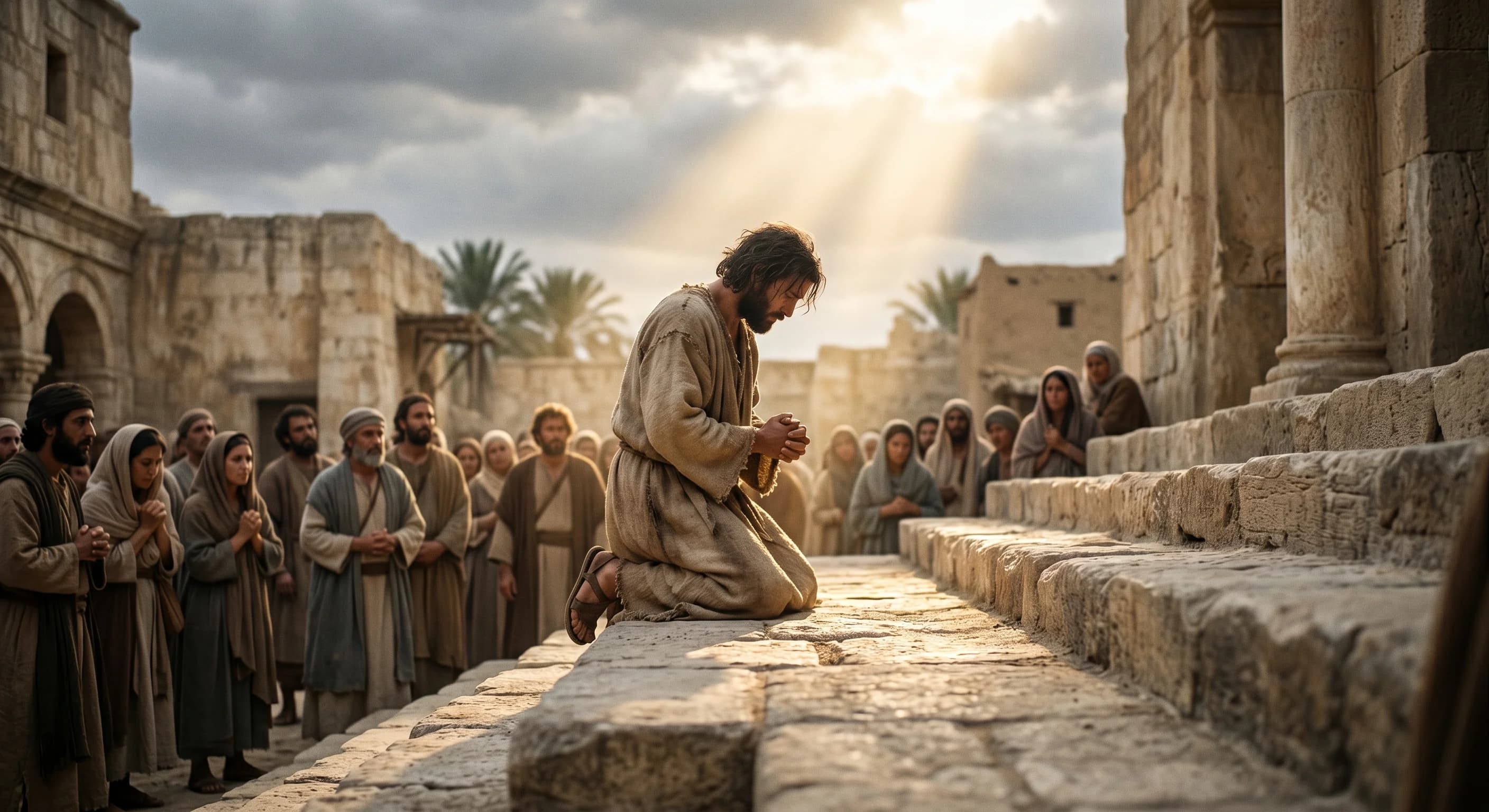
Start for freeHezekiah's response is a model for every crisis: he "spread it before the Lord" (Isaiah 37:14). He takes the letter containing the threats directly to the temple and lays it before God. Isaiah's answer arrives immediately -- Sennacherib will not shoot an arrow into Jerusalem. That night, 185,000 Assyrian soldiers die (Isaiah 37:36). The historical crisis that frames chapters 1-39 is resolved not by military power but by prayer and prophetic promise.
Isaiah 40-48: Comfort and the Sovereign Creator
Isaiah 40 opens with the most abrupt tonal shift in the Hebrew Bible. After thirty-nine chapters of warning, judgment, and threat, chapter 40 begins with a doubled word: "Nachem, nachem ami" -- "Comfort, comfort my people." The doubling is Hebrew emphasis, like "holy holy holy" or "shalom shalom." The comfort is not half-hearted.
The chapter immediately asks: what is the basis for this comfort? The answer: the sovereignty and power of God over creation. "He it is who sits above the circle of the earth" (Isaiah 40:22, ESV). "The nations are as a drop of a bucket" (Isaiah 40:15). Every argument for despair -- the enemy is too powerful, the exile too long, God has forgotten -- is answered by pointing to the Creator who numbers the stars and calls them each by name.
Isaiah 40:31 -- "They that wait upon the Lord shall renew their strength; they shall mount up with wings as eagles; they shall run, and not be weary; and they shall walk, and not faint" -- is one of the most quoted verses in all of scripture. The Hebrew "qavah" (wait/hope) carries the meaning of binding together, like strands twisting into rope. Those who intertwine their lives with God's purposes find their strength renewed by his.
Isaiah 49-55: The Servant Songs
The four Servant Songs are embedded in chapters 42-53 and reach their climax in the famous fifty-third chapter. They present a figure -- the Servant of YHWH -- who embodies Israel's mission, suffers Israel's consequences, and achieves what Israel could not.
Isaiah 42:1-9 introduces the Servant: "Behold my servant, whom I uphold; mine elect, in whom my soul delighteth; I have put my spirit upon him: he shall bring forth judgment to the Gentiles." He will not "cry, nor lift up, nor cause his voice to be heard in the street" -- his power is not in noise but in faithfulness. Matthew 12:17-21 applies this song directly to Jesus.
Isaiah 53 is the culmination. "He is despised and rejected of men; a man of sorrows, and acquainted with grief" (Isaiah 53:3). "He was wounded for our transgressions, he was bruised for our iniquities: the chastisement of our peace was upon him; and with his stripes we are healed" (Isaiah 53:5). These lines describe the Atonement with a precision and tenderness unmatched in any other Old Testament text. Philip quotes this chapter when explaining the gospel to the Ethiopian eunuch (Acts 8:32-35). Abinadi quotes it when testifying to Noah's priests (Mosiah 14). The Savior himself quotes or alludes to it repeatedly.
The Hebrew verb "nasa" (to bear, to carry, to take away) appears in Isaiah 53 three times. It is the same word used in the sacrificial system for the priest who "bears" the sin of the congregation. The Servant does not merely sympathize with human sin -- he carries it, removes it, and takes it upon himself in the most literal sense available to Hebrew.
Study Questions for Week 36
How does Hezekiah's response to crisis (spreading it before the Lord) model your own approach to difficulty? What does Isaiah 40's argument from creation say about the basis of our hope? Which verse of Isaiah 53 speaks most personally to your own experience of the Atonement?
Frequently Asked Questions
Go deeper with Latter-Day Daily
Interlinear Hebrew & Greek, word origins, Come Follow Me, maps, timelines, and 40+ more tools. Free to start — Scholar plan unlocks everything.
Related Study Tools
Interlinear Reader
Read Isaiah 53 in the original Hebrew to see the Atonement language word by word.
Names of Christ
Explore how the Servant Songs (Isaiah 42, 49, 50, 53) name and describe Christ.
Parallel Passages
Compare Isaiah 53 with Mosiah 14 (Abinadi's quotation) and its New Testament applications.
Etymology Explorer
Study 'nasa' (to bear/carry), 'nachem' (comfort), and 'qavah' (wait/hope) in Isaiah 40 and 53.
Scripture Connections
See how Isaiah 40:31 connects to D&C 89:20 and other promises of divine strength.
Related Posts
Isaiah 13-35 Study Guide -- Come Follow Me 2026 Week 35
Isaiah 13-35 moves from oracles against specific nations to an apocalyptic vision of worldwide judgment and restoration. Week 35 of Come Follow Me 2026 contains some of Isaiah's most stunning poetry.
Isaiah 1-12 Study Guide -- Come Follow Me 2026 Week 34
Isaiah 1-12 opens with one of the most dramatic prophetic calls in scripture and climaxes with the Immanuel prophecy and the shoot from Jesse. Week 34 of Come Follow Me 2026 covers Isaiah's most foundational chapters.
Isaiah 56-66 Study Guide -- Come Follow Me 2026 Week 37
Isaiah 56-66 closes the book with a vision of gathered Israel, the true fast of Isaiah 58, the glory of Zion in Isaiah 60, and the new heaven and new earth. Week 37 of Come Follow Me 2026 culminates Isaiah's prophetic vision.
Weekly scripture insights
Get study guides delivered to your inbox each week.