How General Conference Quotes the Old Testament: A Study Guide
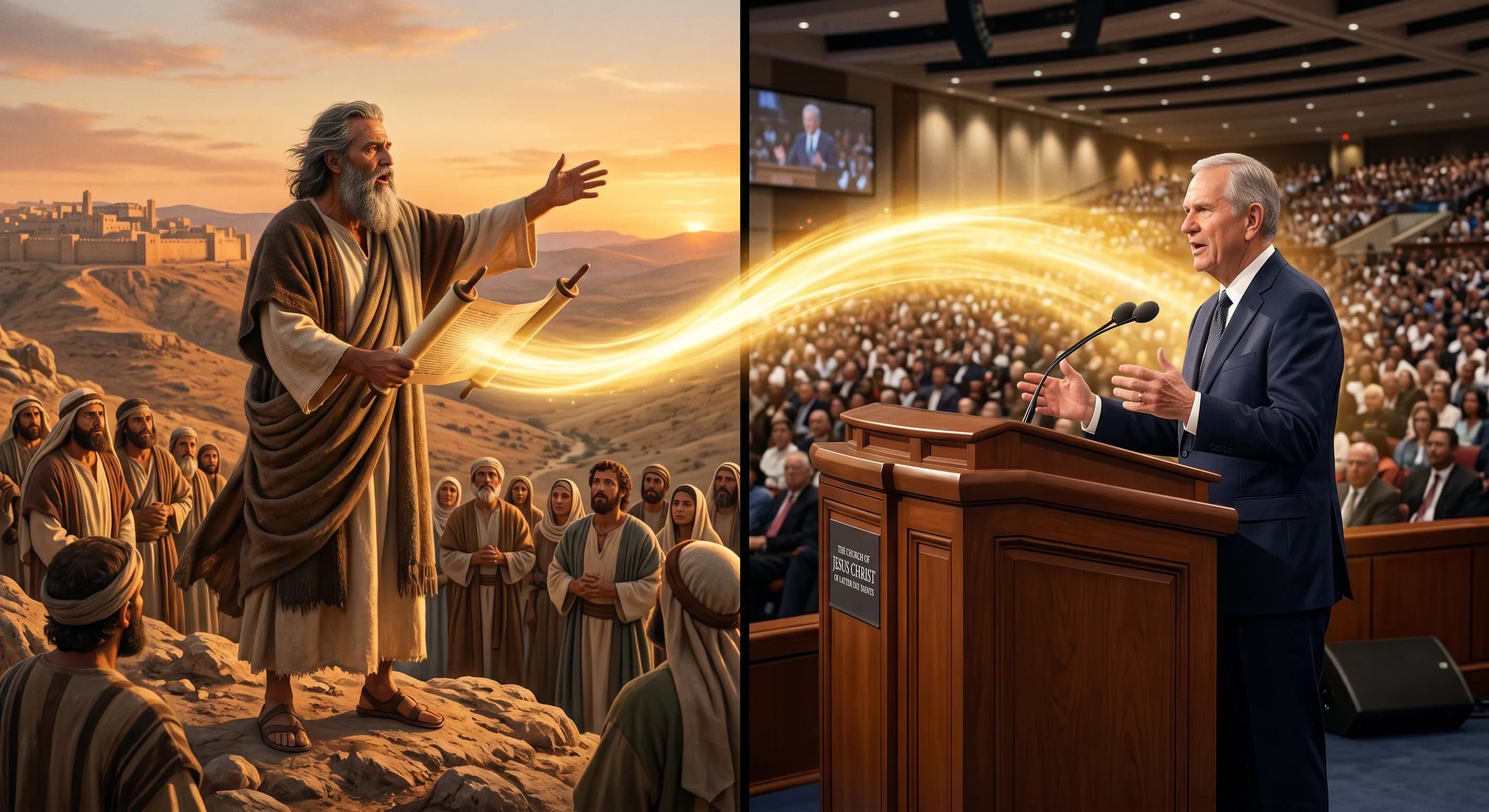
Key Takeaway
Every General Conference session draws heavily from Old Testament prophets -- Isaiah, Jeremiah, Ezekiel, Psalms. Learning to recognize these sources and trace them back to the original makes Conference messages richer and Come Follow Me study more relevant.
Every General Conference session is dense with Old Testament quotations, paraphrases, and allusions. Prophets and apostles cite Isaiah to describe the gathering of Israel, Jeremiah to explain covenant renewal, Ezekiel to frame the missionary mandate, and the Psalms to anchor prayers and doxology. For most Conference listeners, these references pass by as familiar phrases without connection to their Old Testament source. Learning to trace them back transforms both experiences -- Conference becomes a masterclass in applied Old Testament theology, and Come Follow Me study becomes a preparation for understanding what living prophets say.
The Most Quoted Old Testament Texts in Conference
Isaiah tops the list, reliably, in every Conference. Isaiah 60:1 ("Arise, shine; for thy light is come") is among the most cited single verses in modern Conference history. Isaiah 29 (the sealed book) and Isaiah 2:2-3 (the mountain of the Lord's house) appear in nearly every sustained discussion of the Restoration. Isaiah 40 (Comfort ye, comfort ye) grounds talks on divine consolation and the Second Coming.
Free Scripture Study Tools
Explore the scriptures with Latter-Day Daily
Interlinear readers, word studies, timeline, maps, Come Follow Me guides, and 40+ more tools — all free.
Start for freeThe Psalms follow Isaiah in frequency. Psalm 46:10 ("Be still, and know that I am God") and Psalm 23 ("The Lord is my shepherd") anchor countless talks on peace and divine care. Psalm 37:4 ("Delight thyself also in the Lord; and he shall give thee the desires of thine heart") appears frequently in talks on personal revelation and righteous desire.
Proverbs is cited for its practical wisdom, with Proverbs 3:5-6 ("Trust in the Lord with all thine heart; and lean not unto thine own understanding") appearing in virtually every Come Follow Me year regardless of curriculum. Proverbs 22:6 ("Train up a child in the way he should go") appears in every General Women's Session.
Jeremiah 31:31-34 (the new covenant written on hearts) provides the theological framework for talks on internalizing the gospel. Ezekiel 37 (the vision of dry bones and the two sticks) is the prophetic proof-text for the gathering of Israel and the role of the Book of Mormon.
How to Trace Conference Quotations
When a Conference speaker quotes a scripture, the footnotes in the published Conference reports include the full reference. The Conference talks published on ChurchofJesusChrist.org and in the Ensign/Liahona are searchable by scripture reference.
The more interesting exercise is to go the other direction: before Conference, study the Come Follow Me Old Testament passages for that week, and then listen for how apostles apply those exact passages. If you are studying Isaiah 40 in Come Follow Me Week 36, the Comfort ye passage almost certainly appeared in a recent Conference talk. Finding that talk and reading how an apostle applied Isaiah 40 to current events gives you both preparation and application simultaneously.
Five Old Testament Passages and Their Conference Applications
Isaiah 60:1 -- "Arise, Shine": This verse appears most frequently in talks about missionary work, the gathering of Israel, and the Restoration as a light dispelling darkness. Speakers apply it to individual disciples ("you are a source of light in your community"), to the Church as an institution, and to the prophesied global gathering. Studying Isaiah 60 with these applications in mind reveals that the verse is addressed to Zion collectively -- the command to arise and shine is given to the covenant community, not just to individual members.
Ezekiel 37:15-22 -- The Two Sticks: The vision of two sticks becoming one is the Book of Mormon's own proof-text for its existence and role. Conference talks on the Book of Mormon almost universally cite this passage. Understanding Ezekiel's original context -- the reunification of the divided kingdoms of Judah and Israel -- reveals that the "two sticks" prophecy is about covenant restoration: the scattered Israel being gathered back into one covenant people through two books (the Bible and the Book of Mormon) that make one complete witness.
Malachi 3-4 -- The Messenger and Elijah: Malachi appears in Conference more frequently than its place as the final book of the Old Testament might suggest. The prophecy of Elijah's return (Malachi 4:5-6) -- quoted by Moroni to Joseph Smith -- frames every talk on temple work and family history. Malachi 3:10 ("Bring ye all the tithes into the storehouse") grounds the law of tithing in its Old Testament covenant context.
Jeremiah 29:11 -- "For I know the thoughts I think toward you": Jeremiah wrote this verse to Jews exiled in Babylon -- not promises of comfort but promises of divine purpose in the middle of catastrophe. Conference speakers frequently quote it in talks on adversity, uncertainty, and God's long-range purposes. Understanding the exile context makes the promise more powerful, not less: God was not promising an easy life but a purposeful one even in the hardest circumstances.
Proverbs 3:5-6 -- "Trust in the Lord with all thine heart": This may be the single most consistently quoted verse in Conference history. It grounds talks on personal revelation, decision-making, uncertainty, and the relationship between human understanding and divine direction. The Hebrew behind "lean not unto thine own understanding" -- "al-tisha'en" -- uses a word meaning to lean, to prop oneself up, to depend on for support. The instruction is not to distrust human reason but to stop propping yourself up on it instead of on God.
Building a Conference Preparation Habit
The most effective Conference preparation for Come Follow Me 2026 students is to finish each week's Old Testament reading with a question: which Conference talks have applied these scriptures to our day? A General Conference search by scripture reference reveals this quickly. Reading two or three such talks before the next Conference session creates a framework for recognizing what the speakers are doing with Old Testament texts in real time.
The prophets of this dispensation are not departing from the Old Testament prophets -- they are applying them. The more deeply you know the original, the more clearly you hear the application.
Frequently Asked Questions
Go deeper with Latter-Day Daily
Interlinear Hebrew & Greek, word origins, Come Follow Me, maps, timelines, and 40+ more tools. Free to start — Scholar plan unlocks everything.
Related Study Tools
General Conference
Find every General Conference talk that quotes or alludes to specific Old Testament passages.
Scripture Connections
Find cross-references from Old Testament verses to Conference talks and other volumes of scripture.
Prophet Commentary
Read what modern prophets and apostles have said about specific Old Testament passages.
Parallel Passages
Compare Old Testament passages with their Book of Mormon and New Testament counterparts.
Names of Christ
See how Conference speakers draw on Old Testament Messianic titles for Christ.
Related Posts
Isaiah 13-35 Study Guide -- Come Follow Me 2026 Week 35
Isaiah 13-35 moves from oracles against specific nations to an apocalyptic vision of worldwide judgment and restoration. Week 35 of Come Follow Me 2026 contains some of Isaiah's most stunning poetry.
Isaiah 36-55 Study Guide -- Come Follow Me 2026 Week 36
Isaiah 36-55 contains the most beloved poetry in the Old Testament: 'Comfort ye, comfort ye my people.' It also contains Isaiah 53 -- the most explicit Old Testament prophecy of Christ's atoning suffering.
Isaiah 56-66 Study Guide -- Come Follow Me 2026 Week 37
Isaiah 56-66 closes the book with a vision of gathered Israel, the true fast of Isaiah 58, the glory of Zion in Isaiah 60, and the new heaven and new earth. Week 37 of Come Follow Me 2026 culminates Isaiah's prophetic vision.
Weekly scripture insights
Get study guides delivered to your inbox each week.