Plates of the Book of Mormon -- A Visual Guide to the Source Records
Key Takeaway
The Book of Mormon was not written on a single set of plates. It draws from at least five distinct records, and understanding which plates contributed to which sections transforms how you read the text.
Readers of the Book of Mormon sometimes picture Joseph Smith translating a single, monolithic record. The reality is far more complex. Mormon and Moroni compiled their abridgment from multiple sets of plates, each with its own author, time period, and purpose. Understanding these source records is essential to reading the Book of Mormon as its editors intended.
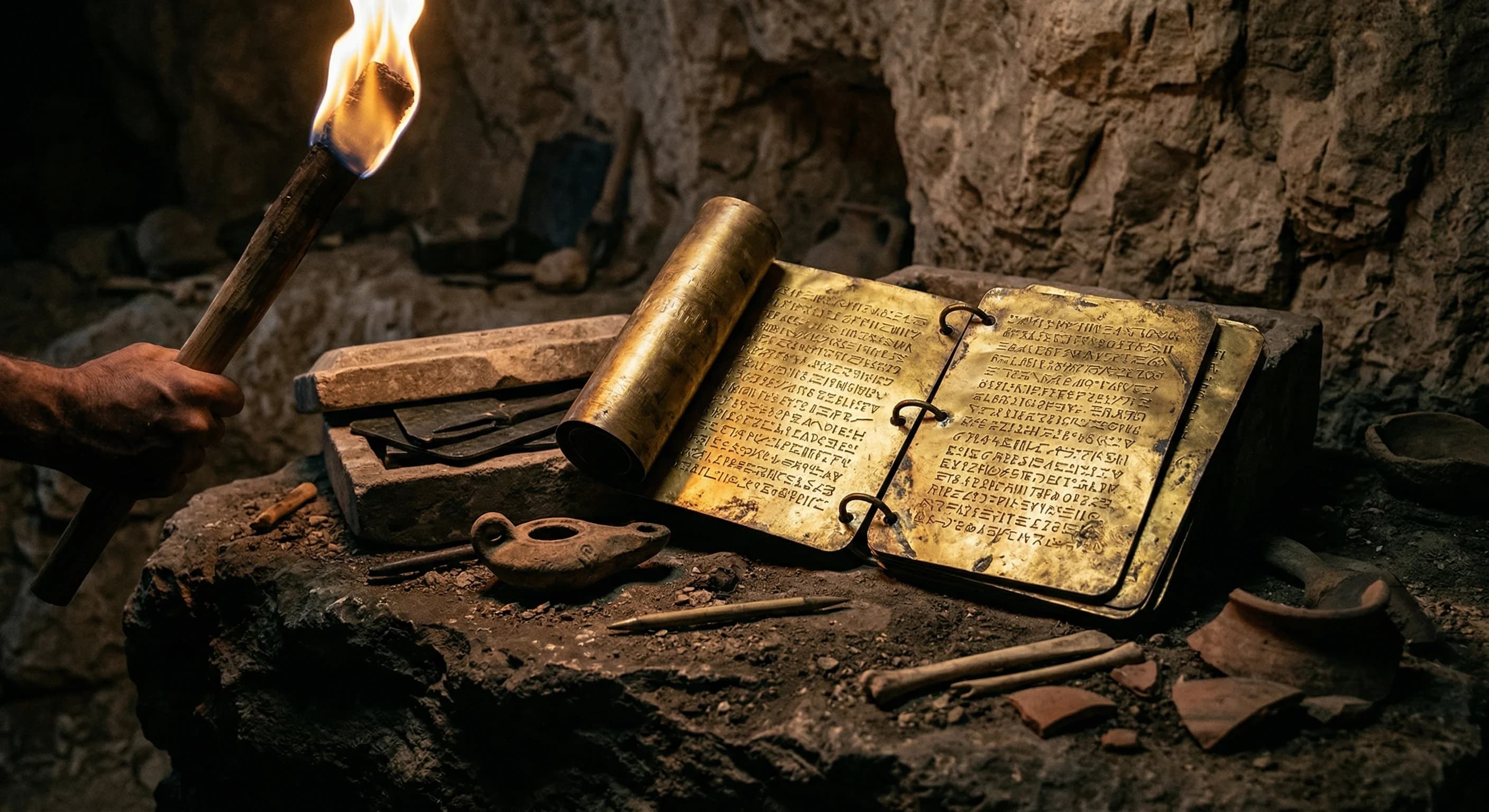
The large plates of Nephi contained the political and military history of the Nephite nation from Nephi through the final battles at Cumorah. Mormon abridged these plates into most of what we now read from Mosiah through Mormon 7. The small plates of Nephi, by contrast, were a separate record focused on spiritual ministry and prophecy. Nephi created them roughly thirty years after leaving Jerusalem, explicitly stating their purpose: "I, Nephi, was commanded to make these plates... for the special purpose that there should be an account engraven of the ministry of my people" (1 Nephi 9:3). These small plates run from 1 Nephi through Omni and were included unabridged -- Mormon inserted them into his record because "they are choice unto me" (Words of Mormon 1:6).
The plates of brass, carried from Jerusalem by Nephi's family, served as the Nephite Old Testament. They contained the five books of Moses, a record of the Jews down to the reign of Zedekiah, and prophecies from prophets including Zenock, Zenos, and Neum who do not appear in the current biblical text (1 Nephi 5:11-13). These plates were never part of the translation directly, but they shaped the theology and language of every Nephite writer who had access to them.
Free Scripture Study Tools
Explore the scriptures with Latter-Day Daily
Interlinear readers, word studies, timeline, maps, Come Follow Me guides, and 40+ more tools — all free.
Start for freeThe plates of Ether, discovered by the people of Limhi, recorded the history of the Jaredite nation. Moroni abridged them into the book of Ether. And the plates of Mormon themselves -- the final compiled record that Joseph Smith received -- included Mormon's abridgment, the small plates, Moroni's additions, and the sealed portion that was not translated. The lost 116 pages came from Mormon's abridgment of the large plates covering the period of Lehi through King Benjamin, which is why the Lord had prepared the small plates as a replacement record covering that same era (Doctrine and Covenants 10:38-42).
The Plates of the Book of Mormon tool presents these relationships visually, showing which ancient record feeds into which modern chapter. Once you see the structure, passages like Words of Mormon -- often skimmed as a transitional note -- become fascinating editorial commentary from a prophet who understood he was assembling scripture for a future audience.
Go deeper with Latter-Day Daily
40+ free tools for scripture study: interlinear Hebrew & Greek, word origins, Come Follow Me, maps, timelines, and more.
Related Study Tools
Related Posts
Doctrine and Covenants: Modern Revelation to the Church
The Doctrine and Covenants is one of four LDS standard works—a collection of revelations received primarily by Joseph Smith from 1828 to 1844, plus a few later revelations from succeeding prophets. Unlike historical narratives, it is direct revelation addressing 19th-century church organization, doctrine, and practice.
Word of Wisdom: The LDS Health Law and Why No Coffee
The Word of Wisdom is a health law revealed to Joseph Smith in 1833, prohibiting alcohol, tobacco, coffee, and tea, while encouraging whole grains, fruits, and vegetables. Members view it as a covenant practice that demonstrates self-mastery and trust in God, and studies show statistically lower rates of cancer and heart disease in LDS populations.
Latter-day Saints vs. Catholics: Similarities and Key Theological Differences
Both Latter-day Saints and Catholics claim roots in early Christianity and value community, family, and scripture. They diverge on apostolic succession, priestly authority, the role of a living prophet, the nature of God, and the seven sacraments versus Latter-day Saint ordinances.
Weekly scripture insights
Get study guides delivered to your inbox each week.