Original Language -- How Hebrew and Greek Root Words Open Up Scripture
Key Takeaway
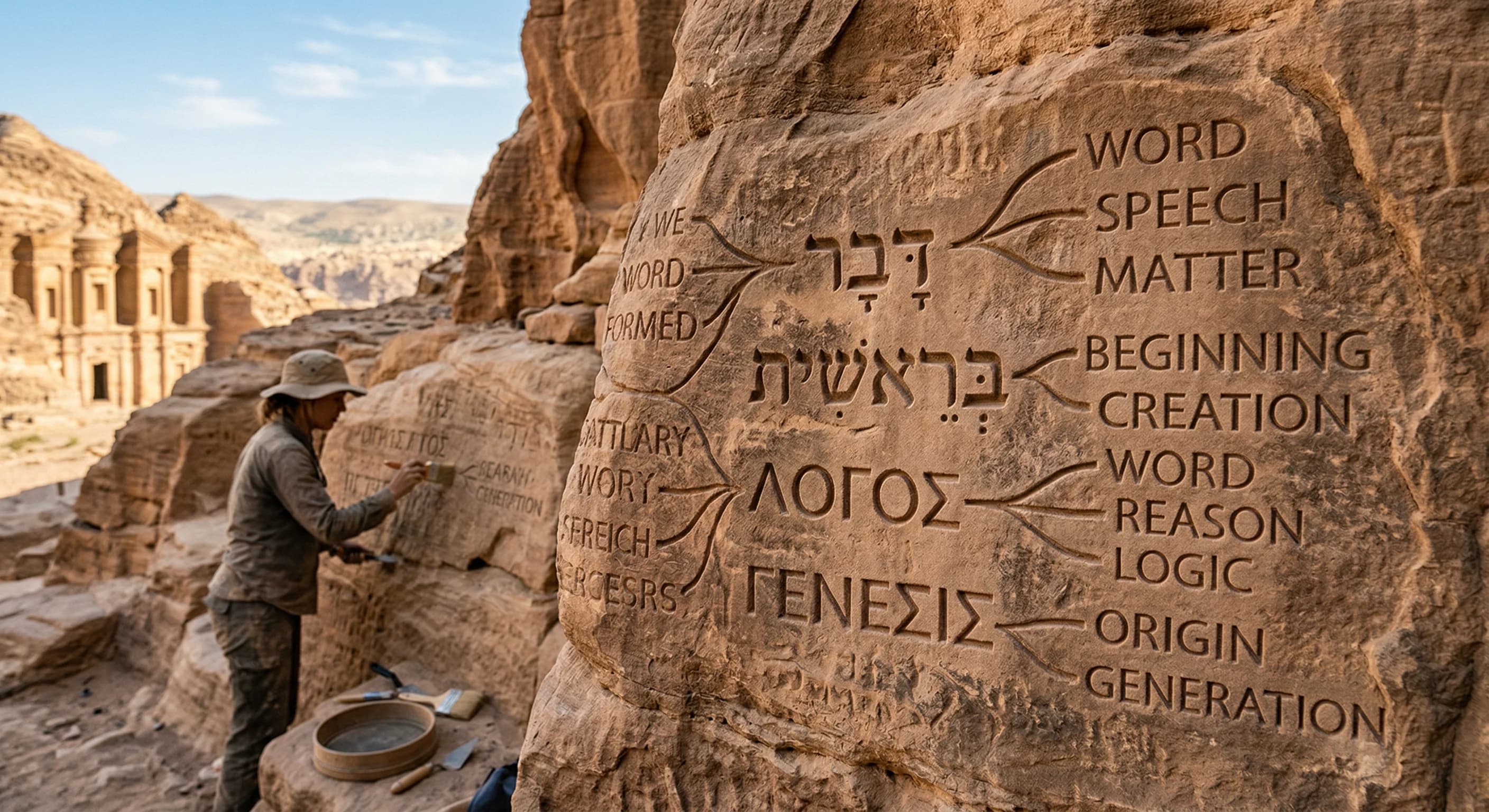
English translations are remarkable achievements, but they inevitably compress the meaning of Hebrew and Greek words into single English equivalents. The Original Language tool lets you browse root words and see the full range of meaning behind the English.
English translations are remarkable achievements, but they inevitably compress meaning. A single Hebrew word might be translated as "love," "mercy," "kindness," or "faithfulness" depending on context, and each English choice obscures the fact that the original author used the same word every time. The Original Language tool gives you access to Hebrew and Greek root words through Strong's concordance data, letting you see the full semantic range behind the English text.
Consider the Hebrew word "shalom." English Bibles typically translate it as "peace," but the word's root (shin-lamed-mem) carries the idea of completeness, wholeness, and restoration to an original state. When the Psalmist writes "The Lord will give strength unto his people; the Lord will bless his people with peace" (Psalm 29:11), the promise is not merely the absence of conflict. It is the promise of complete well-being -- physical, spiritual, relational, and covenantal. The same root appears in "Yerushalayim" (Jerusalem), the city of shalom, and in the greeting that the resurrected Christ gave to His disciples: "Peace be unto you" (John 20:19). Knowing the root transforms all of these passages.
Greek roots are equally revealing. The New Testament uses multiple words that English renders simply as "love." "Agape" (selfless, covenantal love) appears in John 3:16 and 1 Corinthians 13. "Phileo" (affectionate, friendship love) appears in Jesus's conversation with Peter in John 21:15-17, where the interplay between agape and phileo carries emotional weight that the English "lovest thou me" cannot convey. The Original Language tool lets you see which Greek word is used in each instance, so you can follow these distinctions through the entire New Testament.
Free Scripture Study Tools
Explore the scriptures with Latter-Day Daily
Interlinear readers, word studies, timeline, maps, Come Follow Me guides, and 40+ more tools — all free.
Start for freeRoot words also connect passages that seem unrelated in English. The Hebrew root "kapar" (to cover, to atone) appears in the instructions for the Day of Atonement in Leviticus 16, in the pitch that covered Noah's ark in Genesis 6:14, and in the "mercy seat" (kapporet) that covered the Ark of the Covenant in Exodus 25:17. These are not coincidences -- the biblical authors were working with a web of meaning that root-word study makes visible. For Latter-day Saints, this kind of study illuminates how the Atonement of Christ was prefigured in every detail of Israel's worship, from the ark that saved Noah to the mercy seat where God's presence dwelled.
Go deeper with Latter-Day Daily
40+ free tools for scripture study: interlinear Hebrew & Greek, word origins, Come Follow Me, maps, timelines, and more.
Related Study Tools
Related Posts
Psalm 23 in Hebrew -- A Word-by-Word Study of the Shepherd's Psalm
Psalm 23 is the most memorized passage in the Bible, yet its Hebrew vocabulary contains a depth of shepherd imagery, covenant language, and royal overtones that the English barely hints at.
Family Scripture Study Made Easier: Engaging Every Age Group
Family scripture study does not have to be fifteen minutes of monotone reading while the kids zone out. With the right approach and the right tools, it can be the most engaging part of your evening.
Going Deeper: How Original Language Study Changes Everything
You do not need a seminary degree to benefit from the original languages of scripture. Even a basic understanding of Hebrew and Greek roots will change how you read every verse.
Weekly scripture insights
Get study guides delivered to your inbox each week.