Genesis 3-4, Moses 4-5 Study Guide -- "The Fall of Adam and Eve"
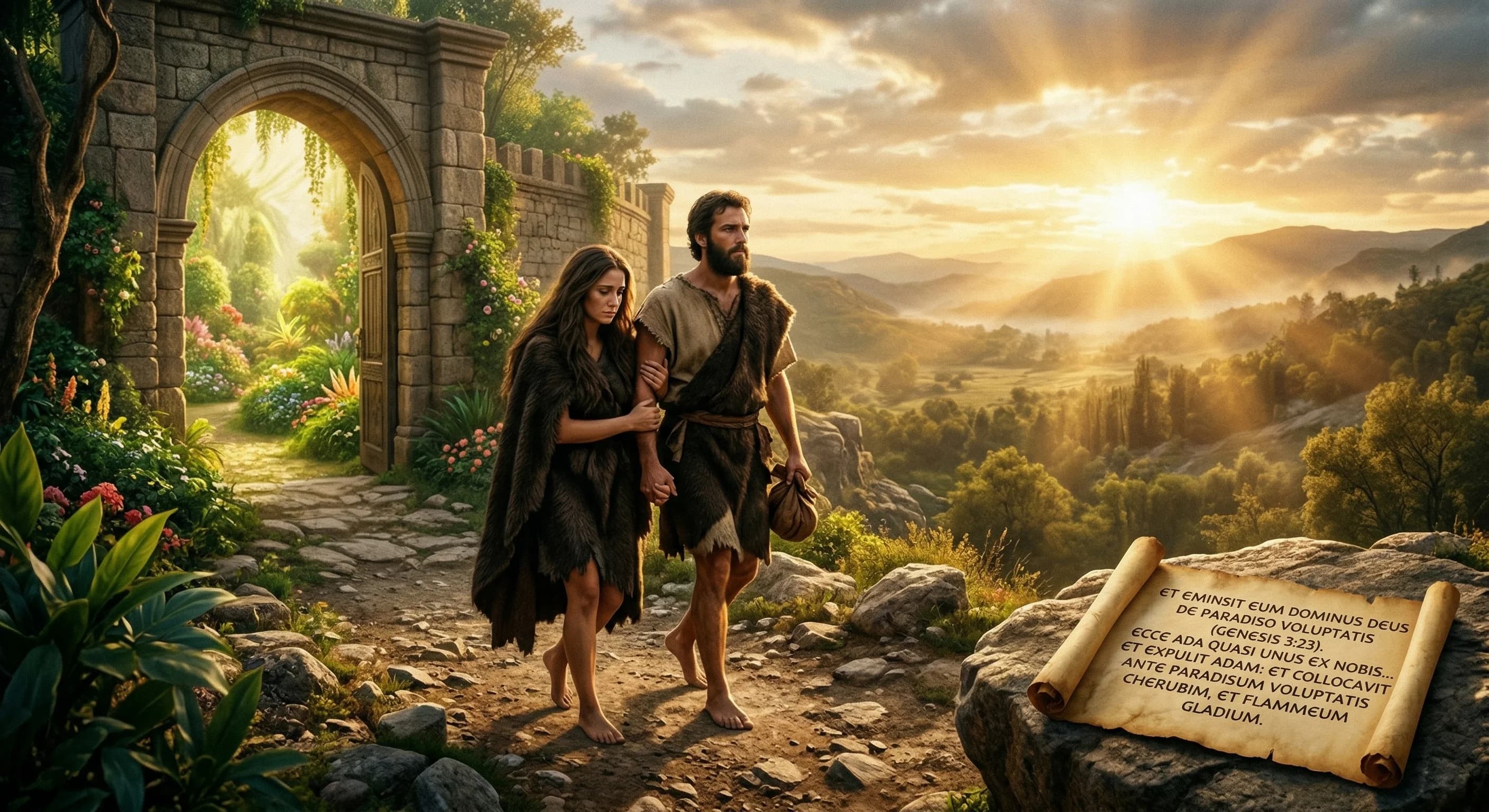
Key Takeaway
The Fall of Adam and Eve is one of the most misunderstood events in scripture. Latter-day Saint theology offers a distinct and hopeful reading: the Fall was a forward step, not a catastrophe.
Genesis 3-4 and Moses 4-5 contain the account of the Fall -- the single event that made mortality, agency, and ultimately the Atonement possible. While much of Christianity reads the Fall as a tragedy, Restored doctrine understands it as a necessary and even courageous choice.
The Hebrew word for the serpent, "nachash," carries multiple meanings: serpent, to divine or enchant, and shining one. Moses 4 clarifies what Genesis leaves ambiguous -- Satan, not a mere animal, was the tempter. The Restoration removes the confusion that centuries of interpretation layered onto this narrative.
Eve's choice deserves careful study. 2 Nephi 2:25 declares: "Adam fell that men might be; and men are, that they might have joy." Eve recognized that progression required leaving the garden. The Hebrew "yada" (to know), as in "the tree of knowledge of good and evil," implies experiential knowledge -- not merely intellectual awareness. To know good and evil required living in a world where both exist.
Free Scripture Study Tools
Explore the scriptures with Latter-Day Daily
Interlinear readers, word studies, timeline, maps, Come Follow Me guides, and 40+ more tools — all free.
Start for freeThe consequences of the Fall -- thorns, sweat, pain in childbirth, mortality -- are not punishments in the way the world often frames them. They are the conditions of a mortal classroom. Every difficulty described in Genesis 3 is also the means by which growth occurs.
Genesis 4 introduces the next consequence of mortality: Cain and Abel. Here the first murder reveals what happens when agency is used to destroy rather than build. God's question to Cain -- "Where is Abel thy brother?" -- echoes through all of scripture as a call to covenant responsibility.
Study questions: How does the Restored understanding of the Fall differ from what other traditions teach? What do the coats of skins (Genesis 3:21) symbolize about God's response to the Fall? Why does God ask Cain a question He already knows the answer to?
Go deeper with Latter-Day Daily
40+ free tools for scripture study: interlinear Hebrew & Greek, word origins, Come Follow Me, maps, timelines, and more.
Related Study Tools
Etymology Explorer
Study the Hebrew meanings of 'nachash' (serpent), 'yada' (to know), and 'adam' (man/earth).
Covenant Tracker
Trace how the covenant of redemption begins immediately after the Fall.
Scripture Connections
Connect Genesis 3 with 2 Nephi 2, Moses 6, and the temple narrative.
Names of Christ
Explore how Christ is foreshadowed in the promise of Genesis 3:15.
Doctrinal DNA
Map how the doctrine of the Fall weaves through all volumes of scripture.
Related Posts
Genesis 24-33 Study Guide -- "Let God Prevail" (Jacob and Esau)
Jacob's story is the story of transformation. From the scheming supplanter who stole a birthright to the man who wrestled with God and became Israel, Genesis 24-33 shows that God works with imperfect people.
Genesis 42-50 Study Guide -- "God Meant It unto Good"
Joseph's reunion with his brothers and his declaration -- "ye thought evil against me; but God meant it unto good" -- is one of the Old Testament's most powerful statements of divine providence.
Genesis 6-11, Moses 8 Study Guide -- "Noah Found Grace"
The story of Noah and the Flood is more than a catastrophe narrative. It is a story of one man who found grace, a world baptized by water, and a covenant sealed with a rainbow.
Weekly scripture insights
Get study guides delivered to your inbox each week.