Bible Genealogies from Adam to Abraham: What the Ancient Lifespans Mean
Key Takeaway
The genealogies from Adam to Abraham record men living 900+ years. These are not errors or myths -- they are purposeful records carrying historical, theological, and prophetic significance that modern readers often miss.
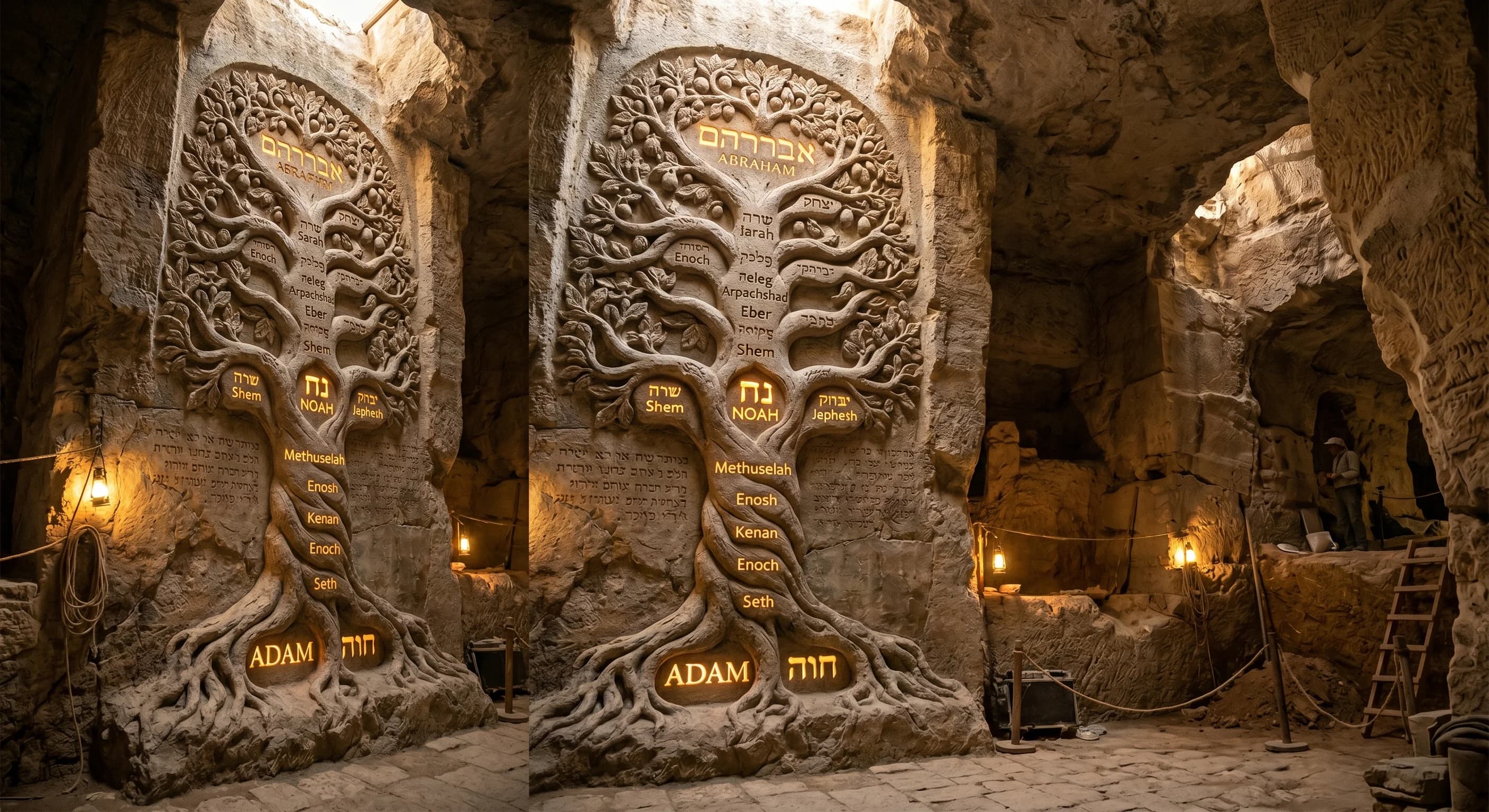
Genesis 5 and 11 contain two genealogies that modern readers often skip: the line from Adam to Noah (Genesis 5) and the line from Shem to Abraham (Genesis 11). Both record patriarchs with lifespans that seem biologically impossible -- Methuselah's 969 years, Noah's 950 years, Shem's 600 years. These genealogies are among the most dismissed passages in the Old Testament, yet for Latter-day Saints who believe in the literalness of the scriptural record, they reward careful study.
Why the Genealogies Are There
Ancient cultures transmitted their identity through genealogy. Your place in the family line was your identity -- it determined your legal status, your inheritance, your marriage options, and your covenantal standing. The genealogies from Adam to Abraham are not filler material between narrative sections. They are the spine of the covenant transmission: the record of how the priesthood, the covenant promises, and the sacred knowledge were passed from father to son across generations.
Free Scripture Study Tools
Explore the scriptures with Latter-Day Daily
Interlinear readers, word studies, timeline, maps, Come Follow Me guides, and 40+ more tools — all free.
Start for freeMoses 6 (the Restoration expansion of Genesis 5) reveals that this genealogy was kept in a "book of remembrance" -- a specific record maintained by Adam's descendants. "And a book of remembrance was kept, in the which was recorded, in the language of Adam, for it was given unto as many as called upon God to write by the spirit of inspiration" (Moses 6:5). The genealogy is not merely biological record-keeping but sacred history.
What the Lifespans Might Mean
Several scholarly frameworks have been proposed for the extraordinary lifespans:
The literal reading holds that pre-Flood humans genuinely lived these lifespans, that the Flood altered either the atmosphere, diet, or biological conditions of human life, leading to the gradual reduction in lifespans visible in Genesis 11 (where the post-Flood patriarchs live significantly shorter lives -- Shem 600 years, Arphaxad 438, down to Nahor 148). This reading is straightforward and consistent with a literal scriptural view.
A second framework suggests the numbers reflect a different measurement system (lunar months rather than solar years would reduce 969 years to about 78 years of solar time, a plausible age for Methuselah). This framework has mathematical elegance but inconsistencies -- some of the younger patriarchs would father children as toddlers if their ages are calculated in lunar months.
A third framework sees the large numbers as theological statements: the greater the patriarch's covenant faithfulness, the longer the lifespan, reflecting divine favor. The gradual reduction of lifespans after the Flood reflects increasing covenant distance from God, with Abraham's 175 years still substantially longer than the 70-80 years of Psalm 90.
The Meaning Hidden in the Names
The Genesis 5 genealogy, read in Hebrew, contains a hidden message in the sequence of names. Bible scholar Michael Drosnin and others have noted that the Hebrew meanings of the ten names from Adam to Noah form a coherent sentence:
Adam: Man Seth: Appointed Enosh: Mortal Kenan: Sorrow (literally, fixed dwelling in sorrow) Mahalalel: The blessed God Jared: Shall come down (from "yarad," to descend) Enoch: Teaching / dedicated Methuselah: His death shall bring (from "mut" death + "shalach" to send/bring) Lamech: Powerful/lamenting Noah: Rest/comfort
Reading the names in sequence: "Man appointed mortal sorrow; the blessed God shall come down, teaching. His death shall bring the despairing rest/comfort." This is a compressed summary of the gospel embedded in the genealogical record -- whether by design or providence, these names that were given in specific birth contexts across generations form a messianic message.
Enoch: The Exception
Genesis 5 lists each patriarch with a standard formula: "X lived Y years and begat Z, and then lived W more years and died." Every patriarch dies. Except one: "And Enoch walked with God: and he was not; for God took him" (Genesis 5:24). The Hebrews found this verse remarkable enough that later tradition expanded it into the entire Enoch literature. Moses 6-7 in the Pearl of Great Price restore the content that Genesis omits: Enoch's ministry, the building of Zion, the translation of his city.
The Hebrew "laqah" (took) in Genesis 5:24 is the same word used for Elijah's translation (2 Kings 2:3) and for the rod that Aaron's rod swallowed (Exodus 7:12). It implies a divine taking, a translation to another state rather than death. For Latter-day Saints, Enoch's translation is the prototype of the City of Zion that will return in the last days to meet the New Jerusalem.
Methuselah: The Warning Embedded in a Name
If Methuselah's name means "his death shall bring" (a combination of "mut" and "shalach"), then his extraordinarily long life carried a built-in countdown. The Flood came in the year of Methuselah's death (the math works out precisely in the genealogical dates). Methuselah lived 969 years -- as if God were extending the warning as long as possible before the consequences arrived. The oldest man who ever lived was a walking declaration that judgment was coming, and his death was the signal that the time had expired.
What Genesis 11 Teaches About Dispersion
The post-Flood genealogy (Shem to Abraham, Genesis 11) serves a different purpose: it traces the narrowing of the covenant line from Noah's many descendants to the single family of Terah and his son Abram. The Table of Nations (Genesis 10) shows all nations descending from Noah's sons. Genesis 11 then narrows the focus: which line carries the covenant forward? Through Shem (from whom we get "Semite," the Semitic peoples and languages) to Eber (from whom "Hebrew" may derive) to Terah to Abram. The genealogy is a theological argument: God's covenant did not disappear after the Flood -- it was preserved through a specific line that runs directly to Abraham.
Frequently Asked Questions
Go deeper with Latter-Day Daily
Interlinear Hebrew & Greek, word origins, Come Follow Me, maps, timelines, and 40+ more tools. Free to start — Scholar plan unlocks everything.
Related Study Tools
Ancient Lifespans
Visualize and compare the extraordinary lifespans of Genesis patriarchs from Adam to Abraham.
Family Trees
Follow the genealogical line from Adam to Abraham with interactive family tree visualization.
Scripture Timeline
Place the pre-Flood and post-Flood patriarchs on a chronological timeline.
Etymology Explorer
Look up the Hebrew meaning of each patriarch's name in the Genesis 5 and 11 genealogies.
Interlinear Reader
Read Genesis 5:24 ('Enoch walked with God') in the original Hebrew with word-by-word analysis.
Related Posts
Genesis 24-33 Study Guide -- "Let God Prevail" (Jacob and Esau)
Jacob's story is the story of transformation. From the scheming supplanter who stole a birthright to the man who wrestled with God and became Israel, Genesis 24-33 shows that God works with imperfect people.
Genesis 42-50 Study Guide -- "God Meant It unto Good"
Joseph's reunion with his brothers and his declaration -- "ye thought evil against me; but God meant it unto good" -- is one of the Old Testament's most powerful statements of divine providence.
Genesis 6-11, Moses 8 Study Guide -- "Noah Found Grace"
The story of Noah and the Flood is more than a catastrophe narrative. It is a story of one man who found grace, a world baptized by water, and a covenant sealed with a rainbow.
Weekly scripture insights
Get study guides delivered to your inbox each week.