Ten Commandments -- Study with Original Hebrew and LDS Cross-References
Key Takeaway
The Ten Commandments are among the most familiar passages in all of scripture, but studying them in the original Hebrew with Latter-day Saint cross-references reveals dimensions that English translations flatten.
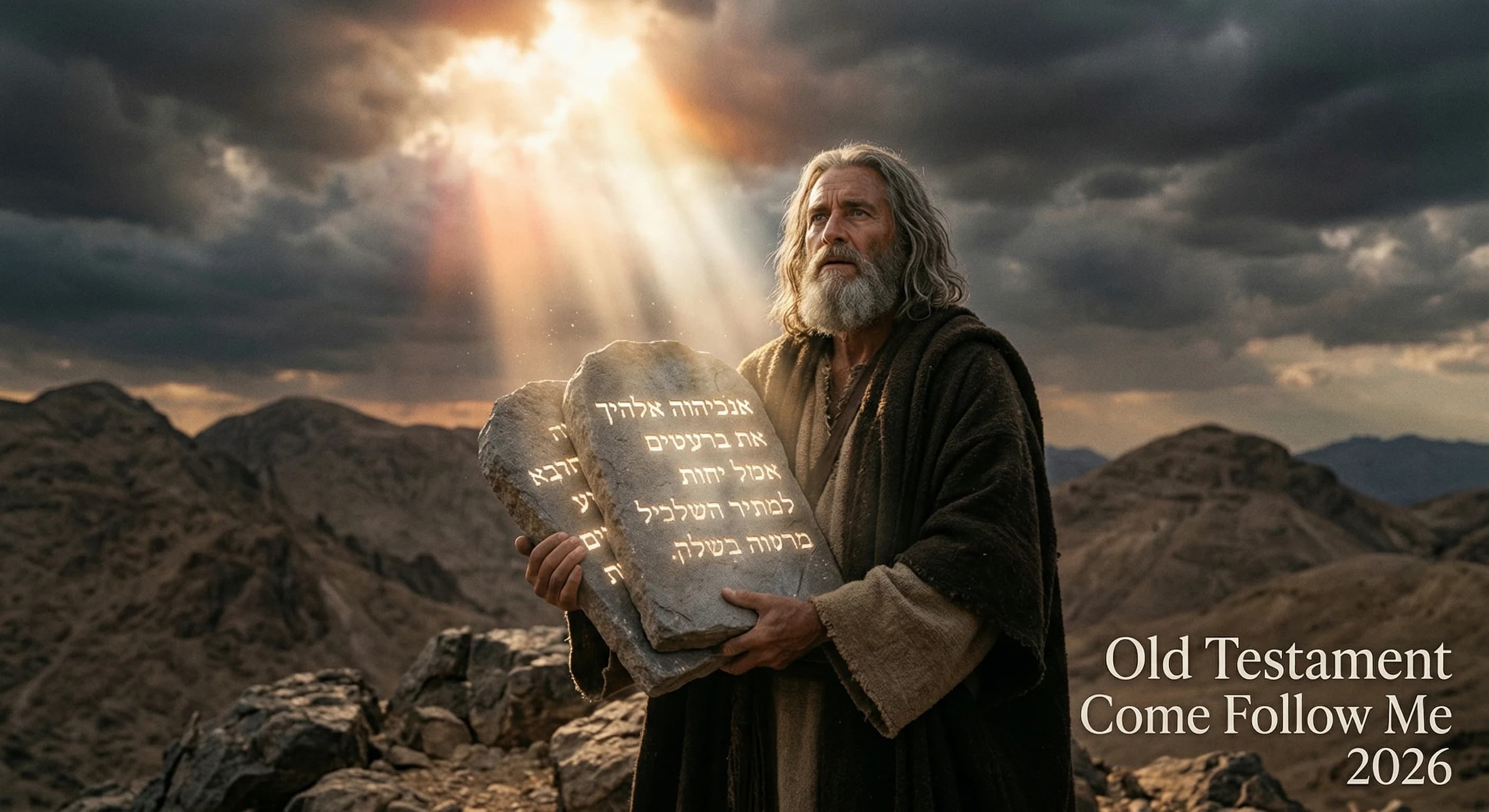
The Ten Commandments are among the most familiar passages in all of scripture. Most people can recite several from memory. But familiarity can breed a shallow reading. When you study the Decalogue in the original Hebrew with Latter-day Saint cross-references, dimensions emerge that English translations flatten into simplicity.
Consider the first commandment: "Thou shalt have no other gods before me" (Exodus 20:3). The Hebrew phrase "al panay" does not simply mean "before me" in the sense of priority. It literally means "upon my face" or "in my presence." The commandment is not merely ranking God above other gods -- it is declaring that in God's presence, no other god can exist. This distinction matters doctrinally. Latter-day Saint theology affirms that God is real and present, not an abstract force, and the Hebrew text supports that immediacy. The Restoration context deepens it further: Doctrine and Covenants 76:1-4 opens the vision of the three degrees of glory by declaring the greatness of God, echoing the same absolute claim that Sinai established.
The fourth commandment to remember the Sabbath ("zakhor et yom ha-Shabbat") uses the Hebrew word "zakhor," which means more than passive recall. It implies active, intentional remembering -- the same root used when God "remembered" His covenant with Abraham in Exodus 2:24. To remember the Sabbath is to actively participate in its holiness, not merely to avoid work. Doctrine and Covenants 59:9-13 expands this understanding for Latter-day Saints, specifying that the Sabbath is a day for offering "oblations" and "sacraments" -- language that ties Sabbath observance to temple and sacrament covenant renewal.
Free Scripture Study Tools
Explore the scriptures with Latter-Day Daily
Interlinear readers, word studies, timeline, maps, Come Follow Me guides, and 40+ more tools — all free.
Start for freeThe commandment against bearing false witness ("lo ta'aneh v're'akha ed shaqer") uses the word "shaqer," which means not just falsehood but emptiness and worthlessness. A false witness is not merely inaccurate -- the testimony is hollow, without substance. This connects to the broader biblical theme of truth as something weighty and reliable (the Hebrew "emet" shares a root with "amen," meaning firm and trustworthy). For Latter-day Saints, the emphasis on testimony as something substantial and real resonates with the pattern of prophetic witnesses established in 2 Nephi 27:12-14 and Doctrine and Covenants 17, where the testimony of the Three Witnesses must be grounded in direct, tangible experience.
The Ten Commandments tool presents each commandment with its Hebrew text, a word-by-word breakdown, and cross-references that stretch from Sinai into the Book of Mormon and the Doctrine and Covenants. The result is a study experience that treats the Decalogue not as a relic of ancient law but as a living covenant document whose principles run through every volume of scripture.
Go deeper with Latter-Day Daily
40+ free tools for scripture study: interlinear Hebrew & Greek, word origins, Come Follow Me, maps, timelines, and more.
Related Study Tools
Related Posts
Doctrine and Covenants: Modern Revelation to the Church
The Doctrine and Covenants is one of four LDS standard works—a collection of revelations received primarily by Joseph Smith from 1828 to 1844, plus a few later revelations from succeeding prophets. Unlike historical narratives, it is direct revelation addressing 19th-century church organization, doctrine, and practice.
Word of Wisdom: The LDS Health Law and Why No Coffee
The Word of Wisdom is a health law revealed to Joseph Smith in 1833, prohibiting alcohol, tobacco, coffee, and tea, while encouraging whole grains, fruits, and vegetables. Members view it as a covenant practice that demonstrates self-mastery and trust in God, and studies show statistically lower rates of cancer and heart disease in LDS populations.
Exodus 1-6 Study Guide -- "I Have Remembered My Covenant"
Exodus begins with Israel in bondage and God declaring: "I have remembered my covenant." Moses's call at the burning bush and the revelation of God's name YHWH set the stage for the greatest deliverance in the Old Testament.
Weekly scripture insights
Get study guides delivered to your inbox each week.