The Interlinear Reader: Studying Scripture Word-by-Word in Hebrew and Greek
Key Takeaway
English translations compress, simplify, and sometimes obscure the original biblical text. The Interlinear Reader places the Hebrew or Greek directly alongside the English so you can see exactly what each word means and why translators made the choices they did.
Every English Bible is an interpretation. Translators must choose a single English word where the Hebrew or Greek carries a range of meanings, and those choices shape how generations of readers understand a passage. The Interlinear Reader on Scripture Deep lets you step behind the translation and examine every word in its original language, with parsing information, root forms, and glosses displayed inline.
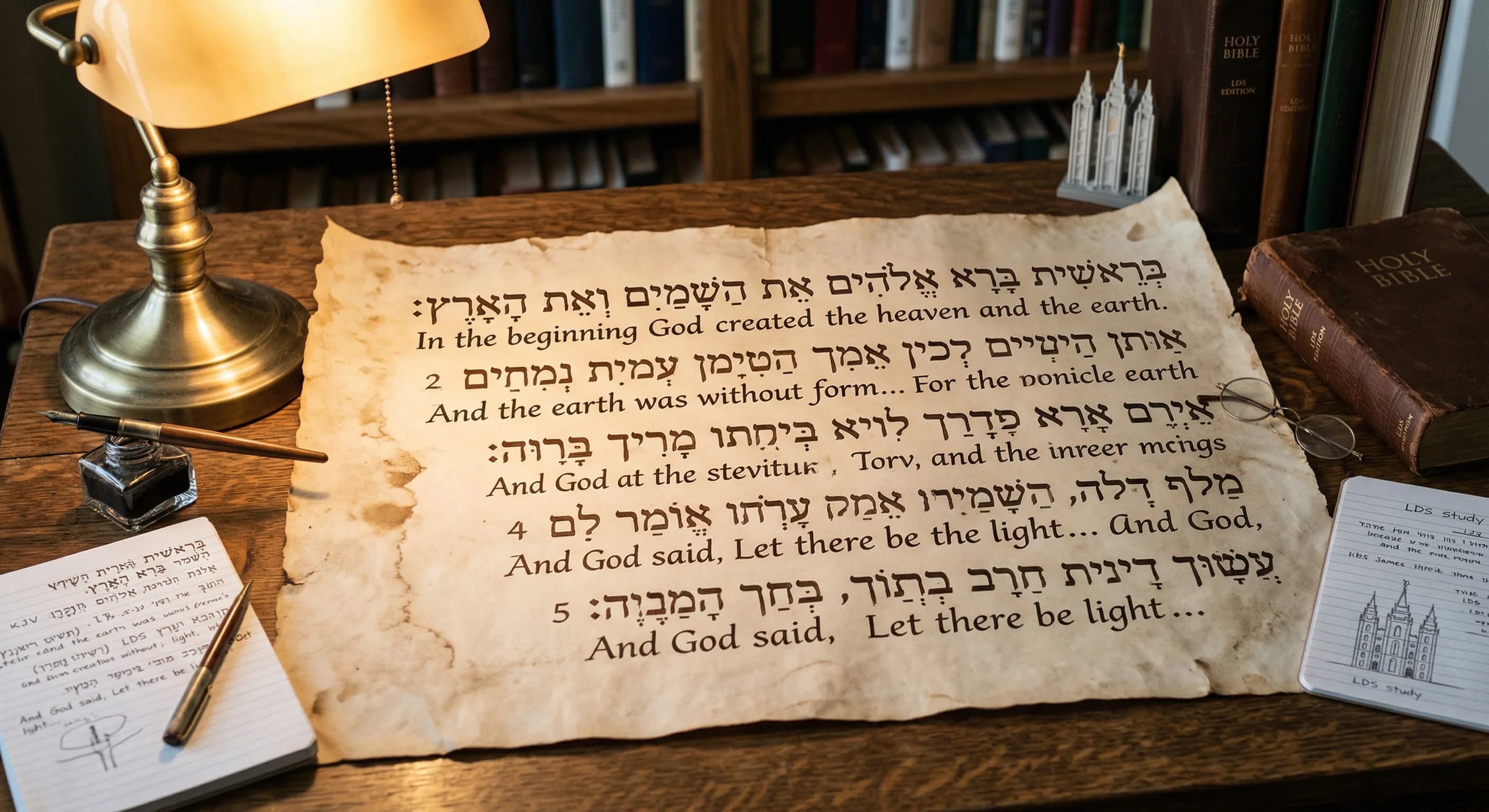
Consider Genesis 1:1. The Hebrew reads "bereshit bara Elohim et hashamayim ve'et ha'aretz." The word "bereshit" is typically rendered "In the beginning," but Hebrew scholars have long debated whether it functions as an absolute statement or a dependent clause -- "When God began to create." That single word changes whether the verse describes creation from nothing or the ordering of pre-existing matter, a distinction with significant theological implications for Latter-day Saints who understand that God organized existing elements rather than creating ex nihilo.
Take another example: Psalm 23:1 says "The Lord is my shepherd." The Hebrew word translated "Lord" is the tetragrammaton YHWH, the covenant name of God, not the generic "Adonai." And "shepherd" -- "ro'i" -- comes from the root ra'ah, meaning to tend, to feed, to pasture. David is not just saying God leads him; he is saying God personally feeds and sustains him the way a Near Eastern shepherd hand-fed his flock. That intimacy is lost in the English.
Free Scripture Study Tools
Explore the scriptures with Latter-Day Daily
Interlinear readers, word studies, timeline, maps, Come Follow Me guides, and 40+ more tools — all free.
Start for freeThe Interlinear Reader makes these discoveries accessible without requiring years of language study. You can tap any Hebrew or Greek word to see its root, its grammatical form, and every other place it appears in scripture. Patterns emerge: you begin to notice when the same Hebrew root appears in Genesis and Isaiah, linking creation imagery to prophetic promises. You see that Paul's Greek echoes the Septuagint in deliberate ways, tying his theology back to the Hebrew prophets.
This kind of study is not academic trivia. When you understand what the original authors actually wrote, familiar verses become richer and more precise. The scriptures stop being a flat English text and become a living document rooted in real languages spoken by real people who chose their words with care.
Go deeper with Latter-Day Daily
40+ free tools for scripture study: interlinear Hebrew & Greek, word origins, Come Follow Me, maps, timelines, and more.
Related Study Tools
Related Posts
Genesis 24-33 Study Guide -- "Let God Prevail" (Jacob and Esau)
Jacob's story is the story of transformation. From the scheming supplanter who stole a birthright to the man who wrestled with God and became Israel, Genesis 24-33 shows that God works with imperfect people.
Genesis 42-50 Study Guide -- "God Meant It unto Good"
Joseph's reunion with his brothers and his declaration -- "ye thought evil against me; but God meant it unto good" -- is one of the Old Testament's most powerful statements of divine providence.
Genesis 18-23 Study Guide -- "Is Any Thing Too Hard for the Lord?"
From Abraham's bold intercession for Sodom to the binding of Isaac on Mount Moriah, Genesis 18-23 contains some of the most intense and theologically rich narratives in all of scripture.
Weekly scripture insights
Get study guides delivered to your inbox each week.