Biblical Hebrew Alphabet: All 22 Letters for LDS Scripture Study
Key Takeaway
The Hebrew alphabet is not just a writing system. Each of its 22 letters carries pictographic origins and layers of meaning that illuminate the text of the Old Testament in ways that translations cannot.
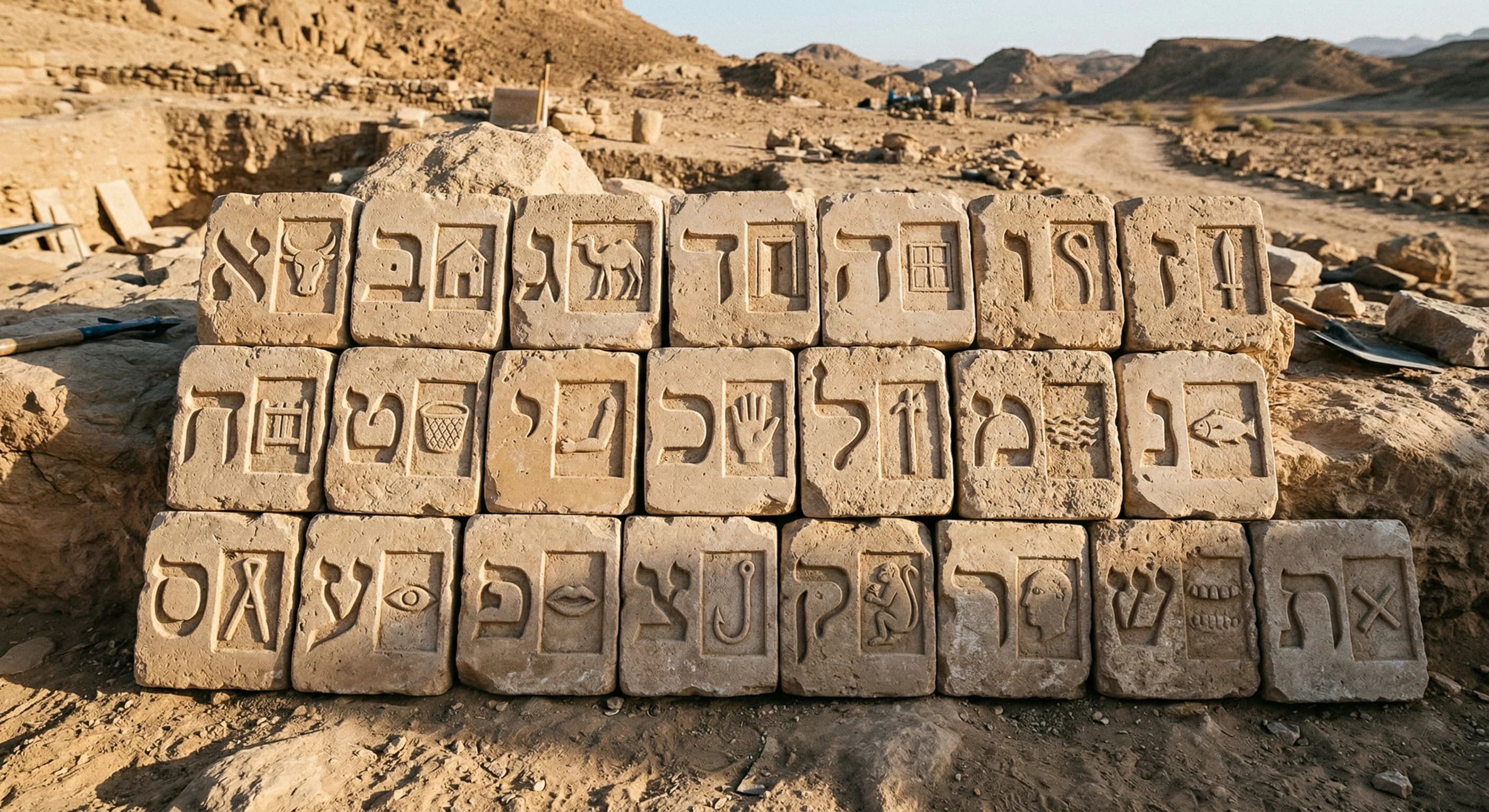
Hebrew is an ancient language, and its alphabet reflects that antiquity. Each of the 22 letters descended from a pictograph -- a small picture that represented a concrete object. Over centuries, those pictures were simplified into the angular script we see in Hebrew Bibles today, but the original meanings still linger beneath the surface.
Take the first letter, Aleph. Its pictographic ancestor was an ox head, rotated and abstracted over time into the form we now recognize. The ox represented strength, leadership, and the first position. This is why Aleph is the first letter: it carries the concept of primacy and power. In Jewish tradition, Aleph is also the silent letter -- it has no sound of its own but takes on the sound of whatever vowel accompanies it. Some rabbis taught that God spoke the entire Torah beginning with Aleph, the silent letter, because divine revelation begins in silence before it becomes speech. Whether or not you adopt that reading, knowing the letter's background adds a dimension to your study that English cannot provide.
The letter Bet, the second letter, was originally a picture of a house or tent. It carries meanings of dwelling, family, and interiority. The first word of the Bible, "Bereshit" (In the beginning), starts with Bet -- and the rabbis noticed this too. Why does the Torah begin with the second letter instead of the first? One traditional answer: because Bet is open on one side, pointing forward into the text, as if to say "start here and read onward."
Free Scripture Study Tools
Explore the scriptures with Latter-Day Daily
Interlinear readers, word studies, timeline, maps, Come Follow Me guides, and 40+ more tools — all free.
Start for freeLearning even the basics of the Hebrew alphabet opens doors that remain closed to English-only readers. You begin to notice wordplay and structural patterns that the original authors embedded deliberately. You can follow along with interlinear texts and start to recognize recurring roots. You do not need to become fluent -- even a working familiarity with the 22 letters changes how you approach the Old Testament.
The Hebrew Alphabet tool teaches each letter with its pictographic origin, its modern form, its numerical value, and example words from scripture. It is designed for beginners with no prior knowledge, and it builds a foundation that supports every other Hebrew-based tool on the site.
Go deeper with Latter-Day Daily
40+ free tools for scripture study: interlinear Hebrew & Greek, word origins, Come Follow Me, maps, timelines, and more.
Related Study Tools
Related Posts
Genesis 24-33 Study Guide -- "Let God Prevail" (Jacob and Esau)
Jacob's story is the story of transformation. From the scheming supplanter who stole a birthright to the man who wrestled with God and became Israel, Genesis 24-33 shows that God works with imperfect people.
Genesis 42-50 Study Guide -- "God Meant It unto Good"
Joseph's reunion with his brothers and his declaration -- "ye thought evil against me; but God meant it unto good" -- is one of the Old Testament's most powerful statements of divine providence.
Genesis 12-17, Abraham 1-2 Study Guide -- "The Abrahamic Covenant"
The Abrahamic covenant -- land, posterity, and priesthood blessing -- is the backbone of the entire Old Testament. Abraham 1-2 restores the personal story behind the covenant's most important recipient.
Weekly scripture insights
Get study guides delivered to your inbox each week.