Joseph Smith Translation: Restoring What Was Lost
Key Takeaway
The Joseph Smith Translation is not a retranslation from Hebrew and Greek. It is something more radical: a prophetic restoration of meaning, context, and doctrine that the biblical text lost over centuries of transmission.
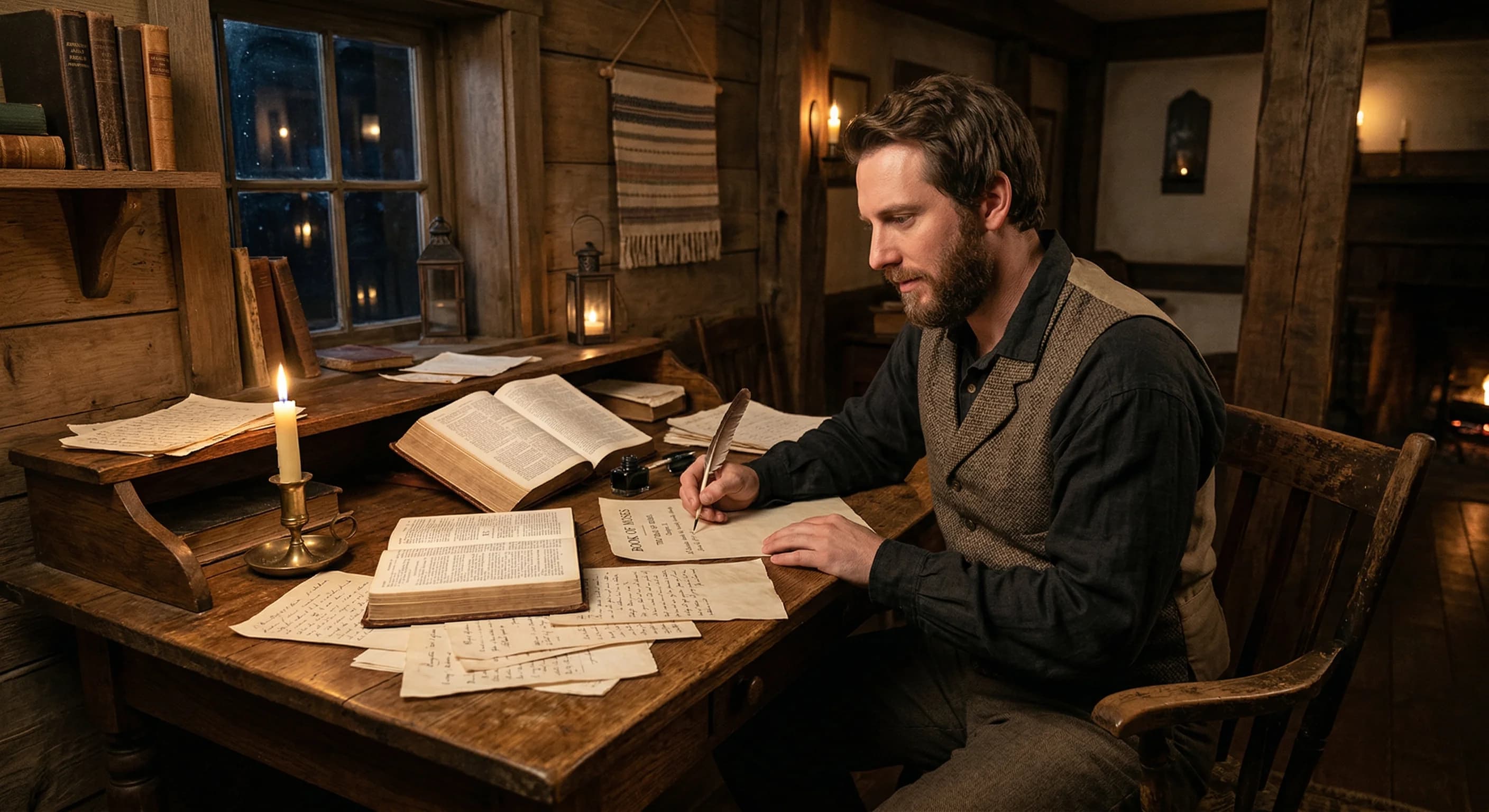
Between 1830 and 1844, Joseph Smith undertook a systematic revision of the King James Bible. He did not work from Hebrew or Greek manuscripts. He worked from the English KJV text, guided by revelation, making changes that ranged from minor clarifications to the insertion of entirely new passages. The resulting work, known as the Joseph Smith Translation (JST), is not published as a standalone Bible by The Church of Jesus Christ of Latter-day Saints, but significant JST passages appear in the footnotes and appendix of the Latter-day Saint edition of the King James Bible. Two major JST extracts -- the Book of Moses and Joseph Smith--Matthew -- are canonized in the Pearl of Great Price. Understanding what the JST is, what it does, and how to use it is essential for any serious Latter-day Saint student of the Bible.
The JST operates on a premise that is unique to Restoration theology: the Bible, as transmitted through centuries of copying, translating, and editing, has lost "plain and precious things" (1 Nephi 13:28). Nephi's vision in 1 Nephi 13 describes a process by which the original writings of the apostles and prophets were altered -- not maliciously in every case, but through the accumulated errors and editorial decisions of scribes, translators, and ecclesiastical councils over nearly two millennia. The JST is Joseph Smith's prophetic effort to restore what was lost. Some changes correct apparent errors in the KJV. Others expand compressed narratives. Still others introduce entirely new material that has no parallel in any surviving manuscript. The claim is not that Joseph Smith was a better linguist than the KJV translators. The claim is that he had access to a source they did not: direct revelation from the original Author.
Several JST passages are so significant that they have shaped Latter-day Saint theology in fundamental ways. The Book of Moses, which is the JST revision of Genesis 1-6, introduces the premortal existence of spirits, the council in heaven, and Satan's rebellion -- doctrines that are absent from the Genesis text as it appears in any other Bible. Moses 1 records a face-to-face encounter between God and Moses that sets the stage for the entire creation narrative: "Behold, thou art my son; wherefore look, and I will show thee the workmanship of mine hands" (Moses 1:4). That single verse establishes a father-child relationship between God and Moses that reframes everything that follows in Genesis. Without it, Genesis begins with an impersonal "In the beginning God created." With it, the creation is a father showing his son what he has made.
Free Scripture Study Tools
Explore the scriptures with Latter-Day Daily
Interlinear readers, word studies, timeline, maps, Come Follow Me guides, and 40+ more tools — all free.
Start for freeJoseph Smith--Matthew, the JST revision of Matthew 24, is another landmark passage. The KJV version of the Olivet Discourse -- Jesus's prophecy of the destruction of Jerusalem and His Second Coming -- is notoriously difficult to interpret because it seems to conflate two events separated by millennia. The JST separates them, making clear which verses refer to the destruction of Jerusalem in AD 70 and which refer to the events preceding the Second Coming. It also adds material about the gathering of the elect and the parable of the fig tree that clarifies the timeline. For Latter-day Saints studying end-times prophecy, Joseph Smith--Matthew is indispensable precisely because it untangles what the KJV leaves knotted.
Other JST changes are smaller but doctrinally significant. In Exodus 33:20, the KJV reads, "Thou canst not see my face: for there shall no man see me, and live." The JST changes this to "Thou canst not see my face at this time, lest mine anger be kindled against thee also, and I destroy thee, and thy people; for there shall no man among them see me at this time, and live, for they are exceeding sinful. And no sinful man hath at any time, neither shall there be any sinful man at any time, that shall see my face and live." The JST revision does not contradict the KJV -- it contextualizes it. The prohibition is not absolute and permanent; it is conditional and specific to that moment. This aligns with other scriptures where prophets do see God face to face (Moses 1:2, Abraham 3:11) and resolves a contradiction that has puzzled biblical scholars for centuries.
Using the JST in personal study is straightforward. The footnotes in the Latter-day Saint edition of the KJV are marked with "JST" followed by the revised text. Longer JST passages appear in the Bible Appendix. The Scripture Explainer tool can surface JST changes alongside the KJV text so you can see both versions in parallel. The key principle is this: the JST is not a curiosity or a historical artifact. It is an active prophetic commentary on the Bible, and it reflects the Restoration's central claim that God has not stopped speaking. When you read the KJV with JST footnotes, you are reading the Bible the way Joseph Smith understood it -- as a living text still being revealed, still being clarified, still yielding its treasures to those who seek them with faith and diligence. As the Lord told Joseph, "The scriptures shall be given, even as they are in mine own bosom, to the salvation of mine own elect" (Doctrine and Covenants 35:20).
Go deeper with Latter-Day Daily
40+ free tools for scripture study: interlinear Hebrew & Greek, word origins, Come Follow Me, maps, timelines, and more.
Related Study Tools
KJV Word Guide
Look up archaic words in JST and KJV passages to understand their original meaning.
Scripture Explainer
Get detailed explanations of JST passages alongside their KJV counterparts.
Bible Dictionary
Look up background on biblical topics including Joseph Smith Translation entries and context.
Related Posts
Doctrine and Covenants: Modern Revelation to the Church
The Doctrine and Covenants is one of four LDS standard works—a collection of revelations received primarily by Joseph Smith from 1828 to 1844, plus a few later revelations from succeeding prophets. Unlike historical narratives, it is direct revelation addressing 19th-century church organization, doctrine, and practice.
Word of Wisdom: The LDS Health Law and Why No Coffee
The Word of Wisdom is a health law revealed to Joseph Smith in 1833, prohibiting alcohol, tobacco, coffee, and tea, while encouraging whole grains, fruits, and vegetables. Members view it as a covenant practice that demonstrates self-mastery and trust in God, and studies show statistically lower rates of cancer and heart disease in LDS populations.
Exodus 1-6 Study Guide -- "I Have Remembered My Covenant"
Exodus begins with Israel in bondage and God declaring: "I have remembered my covenant." Moses's call at the burning bush and the revelation of God's name YHWH set the stage for the greatest deliverance in the Old Testament.
Weekly scripture insights
Get study guides delivered to your inbox each week.