Loading...
Discover the Meaning Behind Scripture Names
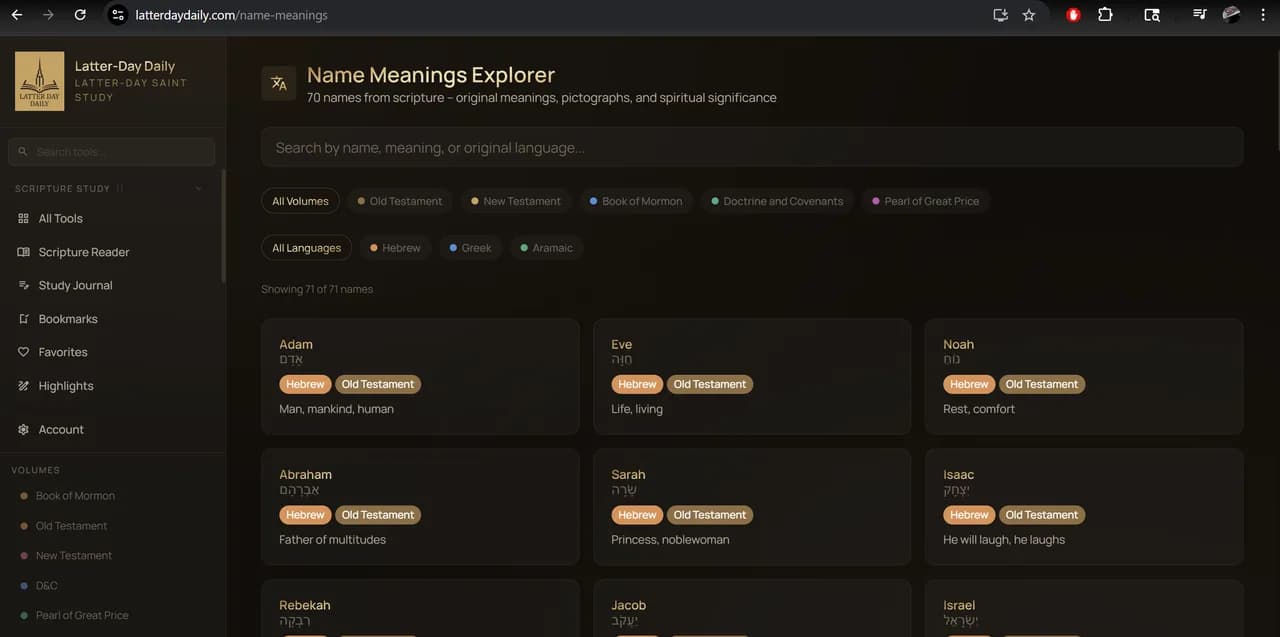
Explore the etymology and spiritual significance of 70 pivotal names from the Old Testament, New Testament, Book of Mormon, Doctrine and Covenants, and Pearl of Great Price. Each name reveals its original language origin, pictographic roots, and profound connection to Latter-day Saint doctrine.
What is the Name Meanings Explorer?
The Name Meanings Explorer is a comprehensive study tool that unlocks the power of scriptural names. In biblical and restoration texts, names are far more than labels -- they carry meaning, reveal character, and foreshadow destiny. When Abram becomes Abraham ('father of multitudes'), or when Jacob wrestles with the divine and becomes Israel ('God prevails'), the name change marks a spiritual transformation. This tool presents 70 of the most significant names from across the standard works, tracing each back to its original Hebrew, Greek, or Aramaic roots.
For Hebrew names, the tool explores the pictographic origins of the letters themselves, revealing how each character originally represented a concrete image. The name Adam comes from 'adamah' meaning earth, connecting humanity to our earthly origin. The name Israel combines 'yisra' (to prevail) with 'el' (God), literally meaning 'God prevails.' These etymological connections deepen understanding of character and purpose, making the names memorable and meaningful for personal scripture study and application.
The Name Meanings Explorer organizes names by their volume of origin -- Old Testament, New Testament, Book of Mormon, Doctrine and Covenants, and Pearl of Great Price -- and allows filtering by language origin. Each name entry includes the original language spelling, the meaning in plain English, the primary scripture reference where the name first appears, and a focused statement of spiritual significance grounded in Latter-day Saint theology and doctrine.
For Latter-day Saints, understanding these names strengthens temple study, deepens family tree work, and illuminates the personhood of those whose names we carry or covenant to uphold. The meaning of a name often explains an ancestor's role, provides insight into their spiritual character, or connects them to broader scriptural themes. Study of these names becomes a form of communion with the scriptures and a means to more fully inhabit the spiritual world of the covenant people.
How It Works
1
Browse all 70 names
View the complete collection of significant scripture names displayed in a card grid. Each card shows the name in English, the original language spelling, language origin, meaning, and volume reference.
2
Filter by volume and language
Use filter tabs to explore names by their source (OT, NT, BoM, DC, PGP) or by original language (Hebrew, Greek, Aramaic) to focus your study on specific traditions and linguistic families.
3
Search for names and meanings
Use the search input to find names by English name, original spelling, or meaning. Quickly locate all names related to a concept or theme.
4
Expand for full details
Click any name card to reveal the complete entry including the pictographic description for Hebrew names, the primary scripture reference, and a focused statement of LDS spiritual significance.
5
Study and apply
Use insights from name meanings in personal scripture study, family history work, teaching preparation, or devotional reflection on the lives and characters of scripture's great figures.
Key Features
Original Language Etymology
Each name presented with its original Hebrew, Greek, or Aramaic spelling and precise etymological meaning, revealing the layers of significance embedded in biblical names.
Pictographic Origins
For Hebrew names, explore how each letter in the name combines pictographic meanings to reveal deeper layers of symbolism and connection to the earth and divine purpose.
Scripture References
Each name includes the primary scripture reference showing where it first appears or is most significant, making it easy to deepen study by turning to the actual text.
LDS Spiritual Significance
Thoughtful connections between each name's meaning and Latter-day Saint doctrine, showing how these ancient names illuminate eternal truths and covenant promises for modern disciples.
Frequently Asked Questions
Why do biblical names have meanings?
In biblical culture, names were far more than labels -- they conveyed meaning, character, and destiny. A name often described the child's character, the circumstances of birth, or God's purpose for that life. When God changed someone's name (Abram to Abraham, Saul to Paul), it marked a spiritual transformation or new mission. Understanding name meanings opens a window into the spiritual realities behind scriptural stories.
What languages are represented in scripture names?
The Name Meanings Explorer includes names from Hebrew (the language of the Old Testament), Greek (the language of the New Testament), and Aramaic (used in portions of Daniel and the targums). The Book of Mormon, Doctrine and Covenants, and Pearl of Great Price primarily use names derived from these ancient languages, making it essential to understand their roots.
What are pictographs in Hebrew names?
Hebrew pictographs are the ancient images from which Hebrew letters originated. Each letter started as a picture: Aleph was an ox head (strength), Bet was a house (family), Gimel was a camel (journey). When multiple letters combine to form a name, the pictographic meanings layer together to create a deeper picture of meaning. For example, the name Adam combines letters whose pictographic meanings suggest 'strength of the human family' -- a profound image for mankind.
How can I use name meanings in my scripture study?
Understanding name meanings enriches personal scripture study in several ways: It helps you remember characters and their roles. It connects you to the spiritual power embedded in names. It shows divine intention and blessing in calling. For family history work, name meanings help you understand your ancestors' spiritual roles. In teaching, it brings names to life and makes them memorable.
Why does the explorer include Book of Mormon names?
The Book of Mormon continues the scriptural tradition of meaningful names. Names like Nephi ('good'), Alma ('maiden'), and Moroni ('strength from God') follow the pattern of Hebrew etymology. Studying these names helps readers recognize the ancient scriptural tradition continuing in the latter-day revelation and deepens connection to the restoration narrative.
Start Using Name Meanings Explorer
Full access to Name Meanings Explorer and 40+ other study tools.
Starting at $7/mo or $69.99/yr
Already have an account? Sign in